Best Hiking Boots for Bad Knees: 6 Picks for Descents
The best hiking boots for bad knees, chosen on cushioning, rocker, drop and descent grip. Plus the trail habits that protect your knees beyond footwear.

The best hiking boots for bad knees combine a thick, soft midsole with a rockered sole, a light build and a grippy outsole you can trust on the way down. Our top pick is the Hoka Kaha 3 GTX, one of the most cushioned hiking boots ever measured, with the Merrell Moab Speed 2 Mid GTX as the lighter alternative. No boot fixes a knee problem on its own, but the right one takes a real edge off long descents.
Most "best boots for knee pain" lists stop at "it's comfy". This one explains what actually changes the load on your knees, why descending is the real test, and what helps beyond footwear. If general comfort matters more to you than knees specifically, our guide to the most comfortable hiking shoes covers that ground.
At a Glance
The Hoka Kaha 3 GTX is the best hiking boot for bad knees if you want maximum cushioning and stability on long days. The Merrell Moab Speed 2 Mid GTX gives you a similarly soft ride at a fraction of the weight, and the Hoka Speedgoat 6 is the pick if you'd rather hike in a cushioned shoe than a boot.
| Product | Best for | Summary | Type | Link |
|---|---|---|---|---|
 Hoka Kaha 3 GTX Hoka Kaha 3 GTX | Best overall | Deepest cushioning and a stable rocker for long descents | Boot | Check price |
 Merrell Moab Speed 2 Mid GTX Merrell Moab Speed 2 Mid GTX | Best lightweight boot | Plush midsole in a boot that weighs around 400g | Boot | Check price |
 Hoka Anacapa 2 Mid GTX Hoka Anacapa 2 Mid GTX | Best for mixed terrain | Cushioned rocker with deeper 5mm lugs for grip | Boot | Check price |
 Altra Olympus 6 Hike Mid GTX Altra Olympus 6 Hike Mid GTX | Best zero-drop boot | Level platform and a roomy, foot-shaped toe box | Boot | Check price |
 Hoka Speedgoat 6 Hoka Speedgoat 6 | Best hiking shoe for bad knees | Max-cushion trail shoe that feels light on long days | Shoe | Check price |
 Salomon X Ultra 5 Mid GTX Salomon X Ultra 5 Mid GTX | Best for technical descents | Stable, grippy boot for rocky, steep ground | Boot | Check price |
Why Your Footwear Affects Your Knees
Going uphill is hard on your lungs. Going downhill is hard on your knees. On every downhill step, your quads lengthen under load to brake your body (an "eccentric" contraction), and the joint behind your kneecap takes the brunt of it. That's why many hikers feel fine on the climb and sore on the descent.
Footwear can't remove that load, but it can change how it arrives. Five things matter most.
Cushioning and Stack Height
Stack height is the thickness of material between your foot and the ground, measured at the heel and forefoot. A tall, soft midsole spreads out the impact of each step over a longer time, which makes landings feel far less jarring. The research on whether cushioning reduces peak forces at the knee is mixed, so think of it as making long descents more tolerable rather than as a treatment.
Rocker Geometry
A rocker is a sole that curves up at the heel and toe, like the base of a rocking chair. It rolls you from landing to toe-off without your foot and ankle doing all the work. On descents, a bevelled heel also lands earlier and more smoothly than a square one, so you don't get that heavy "slap" with every step.
Heel-to-Toe Drop
Drop is the height difference between heel and forefoot. Lower drops (0 to 5mm) tend to shift some work from the knee towards the ankle, calf and Achilles, while higher drops (10mm and above) do the reverse. Neither is better for everyone. If your Achilles or calves are the weak link, don't jump straight to zero drop.
Weight on Your Feet
Heavy boots mean more effort to lift and swing your legs, thousands of times a day. That fatigue matters, because tired quads absorb shock less well and your form gets sloppy late in the day. Every boot here weighs between roughly 400g and 550g (the Speedgoat shoe comes in under 300g), well below a traditional leather backpacking boot.
Stability and Grip on Descents
A soft, tall sole is only useful if it doesn't wobble. A wide base and a stiff chassis keep your foot from rolling on uneven ground, and sticky rubber stops the sudden slip that jolts a knee. That's why we weigh traction as heavily as cushioning.
Best Hiking Boots for Bad Knees
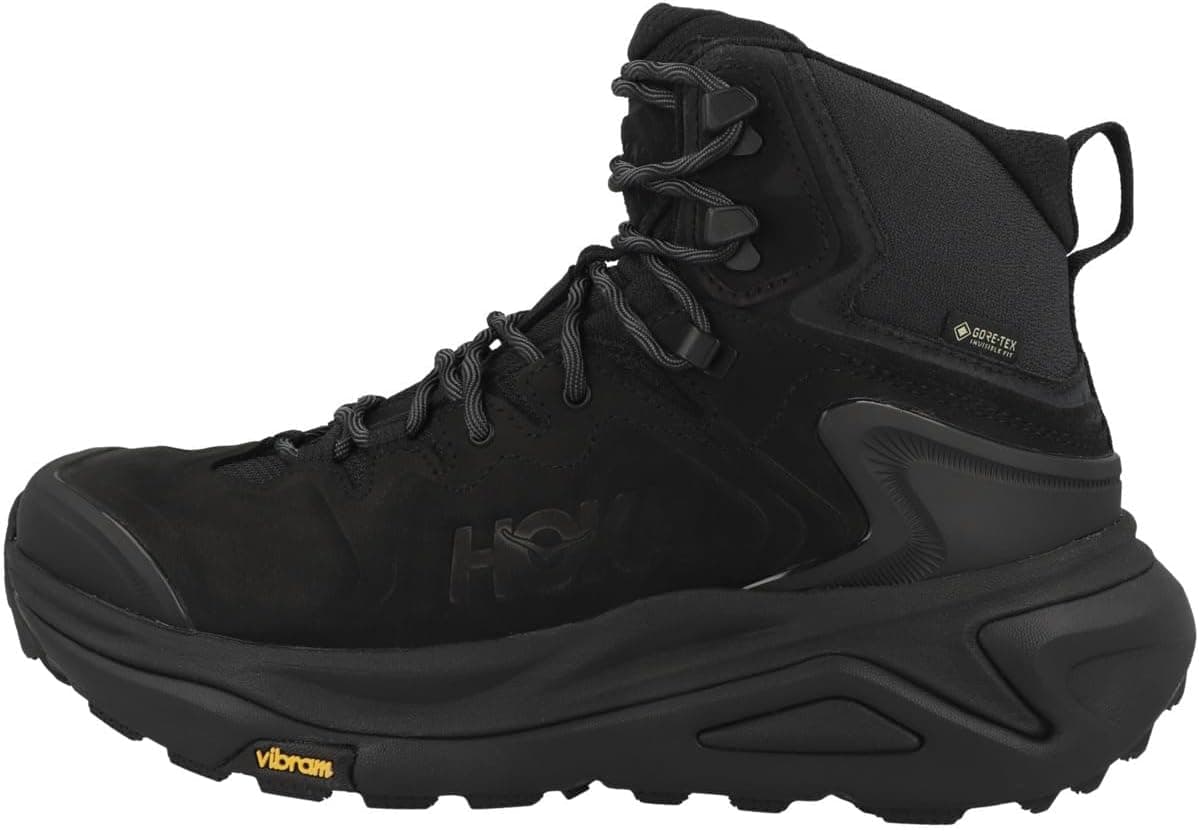
1. Hoka Kaha 3 GTX, Best Overall
The most cushioned hiking boot you can buy, with a rocker and a wide, stable base that make long descents far kinder on sore knees.
Pros
- ✓Exceptional shock absorption, among the highest RunRepeat has measured in a boot
- ✓MetaRocker sole rolls you smoothly through each step
- ✓Wide, torsionally stiff platform feels planted on descents
- ✓Available in wide widths
Cons
- ✕Heavy for a modern boot at around 550g
- ✕Shallower 3.2mm lugs struggle in deep mud
- ✕Runs warm in summer
The Hoka Kaha 3 GTX is the boot most people with knee trouble should try first. RunRepeat measured a 41.9mm heel stack and a 30.4mm forefoot, which is more foam than almost any other hiking boot on the market. The dual-density midsole is soft where you land and firmer where you need support.
What makes it work for knees is how that cushioning is controlled. Hoka's MetaRocker gives you a gentle rocking-chair roll, and the boot is very stiff side to side, so the tall stack doesn't feel tippy on loose ground. Hoka lists an 8mm drop, although the lab measured closer to 11.5mm.
The trade-offs are weight and lugs. At around 550g per boot it's the heaviest pick here, and the outsole lugs are shallower than on the Kaha 2, so it's happiest on well-made trails rather than boggy ground. Women's and low-cut (Kaha 3 Low GTX) versions are also available.
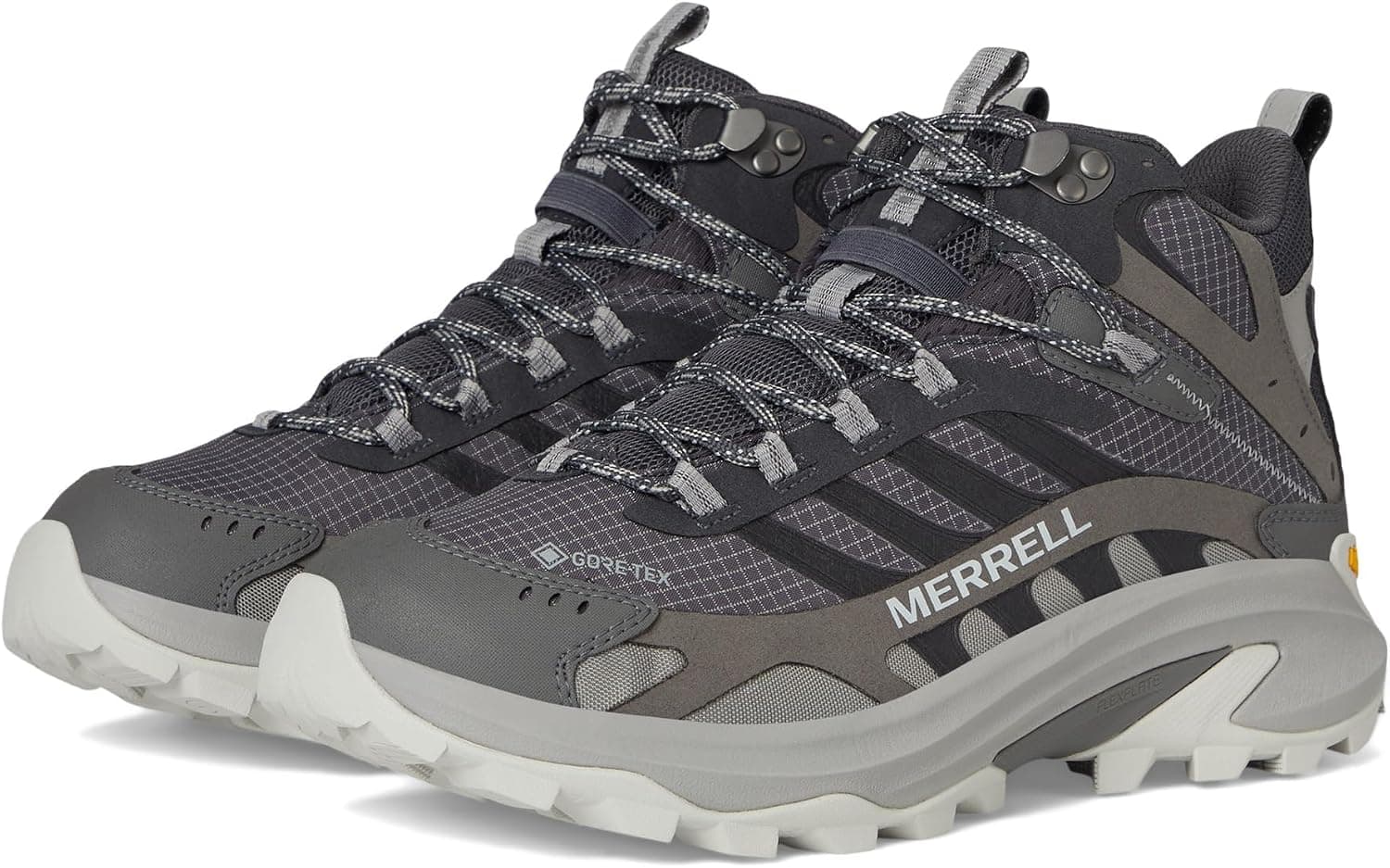
2. Merrell Moab Speed 2 Mid GTX, Best Lightweight Boot
A soft, shock-absorbing boot that weighs barely more than a trail shoe, ideal if heavy boots leave your legs tired by mid-afternoon.
Pros
- ✓Very light for a waterproof mid at around 400g
- ✓Plush midsole, roughly 30% softer than the average boot
- ✓Good traction on mixed rock and light mud
- ✓Durable outer materials
Cons
- ✕High drop (lab-measured close to 14mm)
- ✕Heel hold can feel loose on steep descents
- ✕Slow to dry and limited breathability
The Merrell Moab Speed 2 Mid GTX is the lightest boot in the Moab family, and it surprised the lab with how much cushioning it hides. RunRepeat measured a 40.8mm heel stack, well above Merrell's stated 34mm, and a midsole that's noticeably softer than average.
That combination of low weight and deep foam is exactly what tired knees want on a long day. You lift less with each step, and landings stay soft. Grip from the 3.7mm lugs is solid on mixed terrain.
The weak points are heel lockdown and drop. Some reviewers found the roomy fit slightly sloppy on steep ground, so use a heel-lock lacing pattern before a big descent. The high drop suits heel strikers but won't appeal if you're after a flatter platform. It also comes in a women's version and as a low-cut GTX shoe.
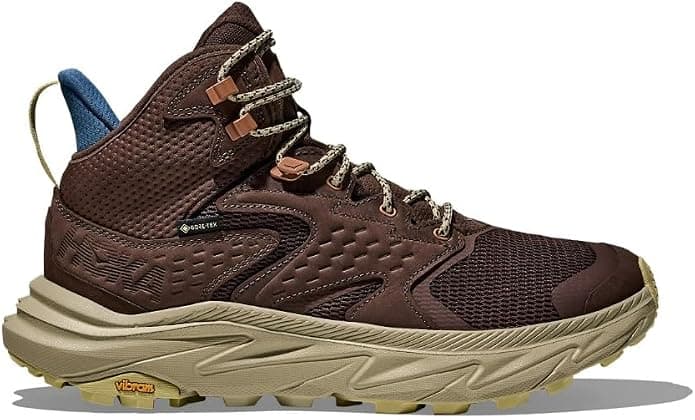
3. Hoka Anacapa 2 Mid GTX, Best for Mixed Terrain
Plenty of Hoka cushioning with a grippier outsole and a lighter, more flexible feel than the Kaha.
Pros
- ✓Deeper 5mm lugs for soft and muddy ground
- ✓SwallowTail heel smooths each landing
- ✓Lighter than the Kaha 3 at around 490g
- ✓Highly stable for its weight
Cons
- ✕Firmer midsole and less stack than the Kaha
- ✕Extended heel can catch between rocks
- ✕Standard width runs narrow
The Hoka Anacapa 2 Mid GTX sits between a cushioned boot and a nimble day hiker. Its 34.4mm heel stack is lower than the Kaha's and the foam is firmer, but the 5mm Vibram Megagrip lugs bite far better in mud and wet grass.
The standout feature for knees is the SwallowTail heel, an extended, bevelled heel that acts like a rocker on landing. It turns heavy heel strikes into smooth roll-throughs, which you'll notice most on long, steady descents.
On technical ground that extended heel is a liability, as it can snag between rocks. It also runs narrower than the Kaha, so if you have wide feet, try it on in the wide fit if you can find one or stick with the Kaha. Women's and low-cut versions exist, and the Anacapa Low features in our comfortable hiking shoes round-up.
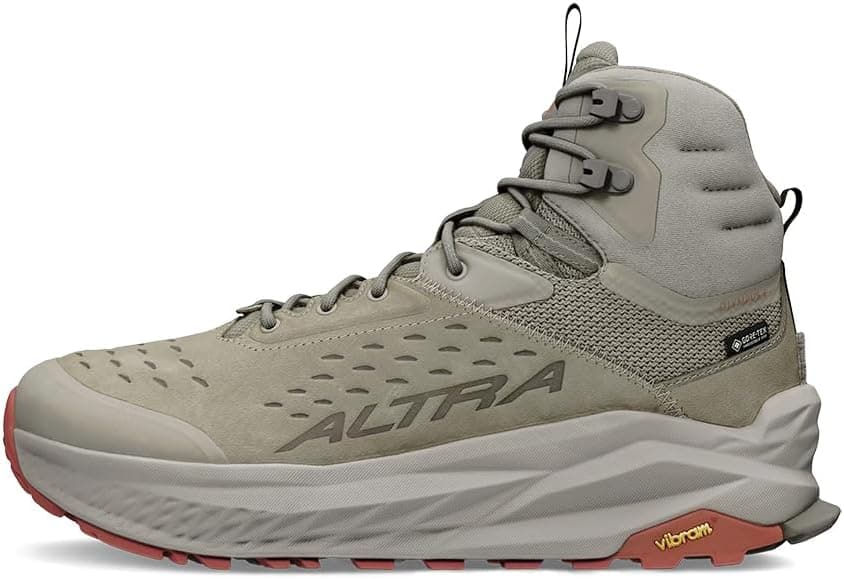
4. Altra Olympus 6 Hike Mid GTX, Best Zero-Drop Boot
A fully cushioned, level-platform boot with a foot-shaped toe box, for hikers who want their knees to share the work with their calves.
Pros
- ✓True zero drop with around 31mm of cushioning
- ✓Roomy, rounded toe box lets toes splay on descents
- ✓Light for its size at around 460g
- ✓Durable upper and Vibram Megagrip outsole
Cons
- ✕Needs a gradual transition if you're used to high drops
- ✕Foam firms up noticeably in the cold
- ✕Not suited to technical, rocky terrain
The Altra Olympus 6 Hike Mid GTX puts your heel and forefoot at the same height on a thick bed of foam (RunRepeat measured 31.6mm at the heel and 31.0mm at the forefoot). Altra's argument is that a level platform encourages a softer, more midfoot landing instead of a heavy heel strike.
The wide toe box is a genuine bonus on descents. Your toes have space to spread instead of jamming into the front of the boot, which also helps if you've ever lost toenails after a long descent. Our Altra vs Topo comparison digs deeper into how the two wide-toe-box brands differ.
Be patient with the switch. Zero drop loads your calves and Achilles more, so build up gradually over a few weeks. If your knee pain comes with tight calves or Achilles issues, a moderate drop boot is the safer bet. A women's version is available.
5. Hoka Speedgoat 6, Best Hiking Shoe for Bad Knees
A max-cushion trail shoe that weighs less than 300g, the easiest way to cut weight on your feet for day hikes on good trails.

Pros
- ✓Deep cushioning at under 300g per shoe
- ✓Low 5mm drop and a mild forefoot rocker
- ✓Vibram Megagrip with 4mm lugs
- ✓Durable, well-padded upper
Cons
- ✕No ankle coverage for heavy loads
- ✕Dense mesh runs warm in summer
- ✕Slightly tapered toe box
The Hoka Speedgoat 6 is a trail running shoe, but it's become a favourite with hikers who want cushioning without boot weight. The lab measured a 32.1mm heel and 27.2mm forefoot stack at just 278g, less than half the weight of the Kaha 3.
For day hikes on maintained trails, this is the most knee-friendly option on the list. Less weight on your feet means fresher legs on the final descent, and the rocker keeps your stride smooth. If you're worried about rolling an ankle in a low shoe, our article on the ankle support myth looks at what the evidence says.
Want waterproofing or a bit more coverage? There's a Speedgoat 6 GTX and a Speedgoat 6 Mid GTX, and women's versions of each. Hoka has since released the Speedgoat 7, which we compare in Hoka vs Salomon, but the 6 is still widely available and often discounted. It's also our cushioning pick among the trail running shoes for plantar fasciitis.
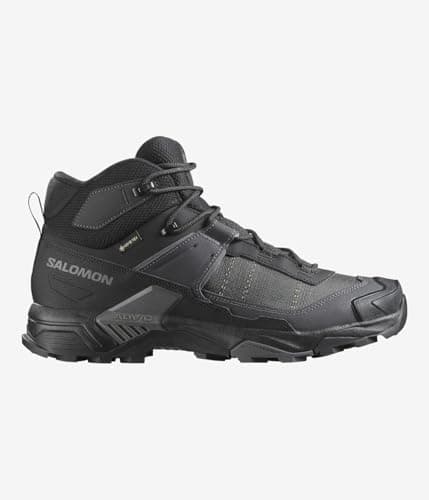
6. Salomon X Ultra 5 Mid GTX, Best for Technical Descents
The least cushioned boot here, but the most precise and stable on steep, rocky ground where a fall or a slip is the bigger risk to your knees.
Pros
- ✓Stable, grounded platform on uneven rock
- ✓Excellent grip on wet stone
- ✓Light for a mid boot at around 440g
- ✓Reliable Gore-Tex waterproofing
Cons
- ✕Limited cushioning and shock absorption
- ✕Firm midsole feels harsh on long hard-packed descents
- ✕Narrow-to-medium fit
The Salomon X Ultra 5 Mid GTX is the odd one out, and that's deliberate. Its firm midsole and 32.5mm heel stack won't soften every step, but it sits you low and stable, and the Contagrip outsole is excellent on wet rock.
On loose scree, slabby descents and rooty mountain paths, control matters more than plushness. A tall, soft boot can feel vague when you need to place your foot precisely, and a single slip can do more damage to a sore knee than a thousand soft landings undo.
Pick this one if your hikes are short but steep and technical, and pair it with poles. For long days on easy trails, any of the cushioned picks above will treat your knees better. A women's version is available, and our Salomon hiking shoe guide covers the rest of the range.
How to Choose Hiking Boots for Knee Pain
Start with the terrain you hike most, then match the specs. The table below uses independent lab measurements (men's US 9) so you can compare the picks on the numbers that matter most for knees.
| Boot | Heel stack | Drop (lab) | Weight per boot | Lug depth |
|---|---|---|---|---|
| Hoka Kaha 3 GTX | 41.9mm | 11.5mm | 550g | 3.2mm |
| Merrell Moab Speed 2 Mid GTX | 40.8mm | 13.9mm | 400g | 3.7mm |
| Hoka Anacapa 2 Mid GTX | 34.4mm | 9.0mm | 494g | 5.0mm |
| Altra Olympus 6 Hike Mid GTX | 31.6mm | 0.6mm | 458g | 3.8mm |
| Hoka Speedgoat 6 | 32.1mm | 4.9mm | 278g | 4.0mm |
| Salomon X Ultra 5 Mid GTX | 32.5mm | 12.7mm | 437g | 3.5mm |
Match Cushioning to the Ground
Long days on hard-packed trails and forest roads reward the tallest, softest stacks, like the Kaha 3 or Moab Speed 2. Rocky, technical ground rewards a lower, firmer platform you can feel through, like the X Ultra 5.
Look for a Rocker
A curved forefoot and bevelled heel make walking smoother and reduce the slap on descents. Hoka builds this into almost every model, and many other brands now follow.
Get the Fit Right for Downhills
Your foot slides forward on every descent. Leave a thumb's width in front of your longest toe, and make sure the heel stays locked when you walk down a ramp in the shop. For new boots, follow our guide on how to break in hiking boots before a big day.
Consider Insoles
The stock insole in most boots is thin. A supportive aftermarket insole can improve alignment and comfort, especially if you overpronate (your foot rolls inward). Our guide to trail running shoes for overpronation explains how that rolling affects the rest of your leg.
What Helps Your Knees Beyond Boots
Footwear is one piece of the puzzle. These habits usually make an even bigger difference on the trail.
Use Two Trekking Poles
Poles take a share of your body weight through your arms on every downhill step. Biomechanics research has measured reductions in knee joint loading of up to around 25% on descents. Use two, not one, and lengthen them by 5 to 10cm before you head down. Our guide to using one or two trekking poles covers setup and technique.
Descend With Shorter Steps
Big strides downhill mean big drops onto a straight leg. Take shorter steps, keep your knees slightly bent, and zigzag across steep slopes where the trail allows it. On tall rock steps, lower yourself with a pole or turn sideways instead of jumping down.
Lighten Your Pack
Every kilo in your pack is a kilo your knees brake on the way down. Trimming a few kilos of gear often helps more than any boot upgrade, especially on multi-day trips.
Build Strength Between Hikes
Strong quads, glutes and hips control the knee on descents. Step-downs, split squats and slow eccentric squats (lowering for three to four seconds) build the exact strength downhill walking demands.
Knee-Friendly Hiking Kit
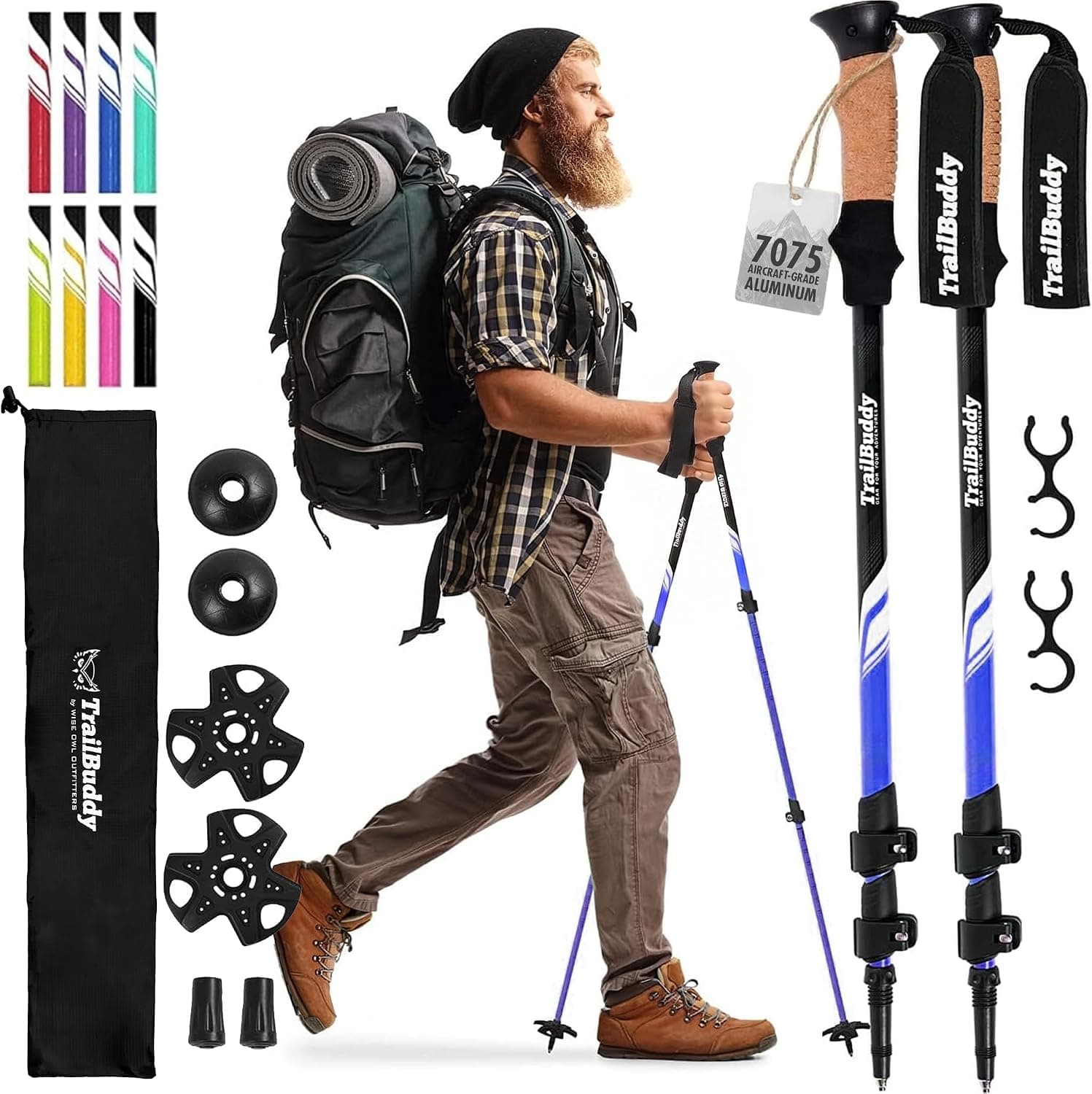 Trekking polesEssential
The single most effective tool for reducing knee load on descents. Use a pair, not one.
- Cushioned hiking socksEssential
Merino socks with padding under the heel and forefoot add comfort and reduce foot slide on downhills.
- Supportive insoles
A firmer heel cup and arch support can improve alignment if the stock insole feels flat.
- Lightweight backpack
A lighter pack and a trimmed kit list cut the load your knees brake on every downhill step.
Frequently Asked Questions
The right boot won't fix sore knees, but it can make the last descent of the day feel a lot less brutal. Start with the Kaha 3 GTX if you hike long days on established trails, then add a pair of poles and a few weeks of step-downs. Your knees will notice the difference.

Jasper Baetens
Hiking enthusiast from Belgium, mainly active in Europe. Created HikeHeaven to share experiences, research, tips, tricks and recommend products — or simply to help other hikers.