Ankle Support in Hiking Boots: Myth or Must-Have?
Do hiking boots really protect your ankles? See what the research says about ankle support and when boots beat trail runners.

Ask any outdoor shop assistant why you need hiking boots and you'll hear the same answer: ankle support. It's one of those pieces of advice that gets repeated so often it feels like established fact. But the research tells a more complicated story, and thousands of long-distance hikers have quietly abandoned boots altogether. The question of whether ankle support in hiking actually matters deserves a closer look.
What Ankle Support in Hiking Actually Means
Before digging into the debate, it helps to define what people mean by ankle support. Most hikers assume that a high-cut boot physically prevents the ankle from rolling sideways on uneven ground. The stiff material around the ankle acts like a splint, holding everything in place.
In theory, this sounds logical. In practice, the forces involved in an ankle sprain are far greater than what a fabric and leather collar can resist. A study published in the British Journal of Sports Medicine found that ankle braces (which are specifically designed to restrict movement) reduce sprain risk by roughly 50%, but they achieve this through compression and proprioceptive feedback, not through rigid immobilisation. A hiking boot collar provides far less restriction than a medical brace.
The real mechanism behind most ankle injuries on the trail isn't a lack of external support. It's a failure of proprioception, your body's ability to sense where your foot is in space and react to changes in terrain. Your ankles have a network of nerve endings and small muscles that constantly adjust your balance. When those systems are slow, fatigued, or undertrained, sprains happen regardless of boot height.
The Research Against High-Cut Boots
Several studies have challenged the traditional view that high-top boots prevent ankle injuries on the trail.
A widely cited study from the Wilderness & Environmental Medicine journal tracked injury rates among military recruits and found no significant difference in ankle injury rates between groups wearing high-cut boots and those wearing low-cut shoes during similar terrain exercises. The soldiers in low-cut shoes actually reported less overall foot fatigue.
Research from the Journal of Athletic Training found that the most significant predictors of ankle sprains were previous injury history, muscle fatigue, and poor proprioceptive ability, not footwear height. Participants with strong ankle proprioception had lower injury rates regardless of what they wore.
Thru-hikers offer compelling anecdotal evidence too. On the Appalachian Trail (roughly 3,500km), an estimated 70-80% of thru-hikers now use trail runners rather than boots. The Pacific Crest Trail community shows similar numbers. These hikers cover some of the most varied and technical terrain in the world, day after day, for months. If boots were essential for ankle safety, you'd expect an epidemic of ankle injuries among trail runner users. The data doesn't support that.
The Case for Boots (When They Do Help)
That said, dismissing boots entirely would be unfair. There are real scenarios where a mid or high-cut boot provides genuine benefits.
Heavy pack weight. When you're carrying 20kg+ on a multi-day trek, the additional weight raises your centre of gravity and increases the leverage on your ankles with every misstep. A stiffer boot doesn't prevent the roll, but it slows it down, giving your proprioceptive system extra milliseconds to react. For backpackers carrying heavy loads, this margin can matter.
Cold and wet conditions. Boot height keeps snow, mud, and debris out of your footwear. This isn't ankle support in the medical sense, but it prevents the secondary problems (blisters, numbness, infections) that lead to instability and poor foot placement. A waterproof boot like the Salomon Quest Element GTX excels in these conditions.
Rehabilitation after injury. If you've recently sprained an ankle or have chronic instability, the additional structure of a boot combined with a proper ankle brace provides a reasonable safety net while you rebuild strength. Relying on the boot alone isn't enough, but it's a useful part of the recovery toolkit.
Rough, rocky terrain with exposure. On scrambling sections, scree slopes, and technical approaches, a boot with a stiff midsole protects your feet from sharp rocks underneath. The ankle collar helps keep small stones from entering the shoe. This is foot protection rather than ankle support, but the practical benefit is real.
Boots vs Trail Runners: A Direct Comparison
Hiking Boots vs Trail Runners
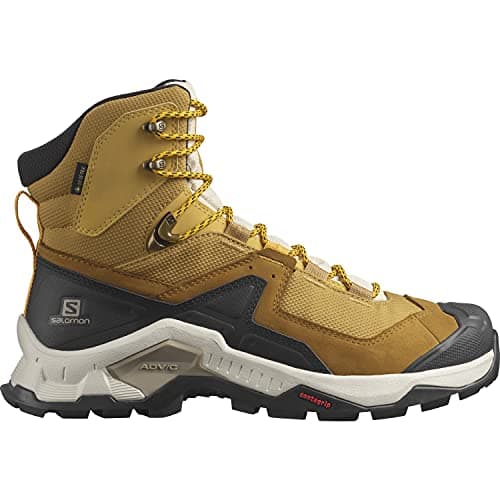
Salomon Quest Element GTX (Boot)
$160
?Estimated price — check latest price on Amazon
Multi-day treks with heavy packs, cold/wet conditions
Pros
- ✓Gore-Tex waterproofing for wet conditions
- ✓Stiff midsole protects feet on rocky terrain
- ✓Collar keeps debris and snow out
- ✓Better under heavy pack loads (20kg+)
Cons
- ✕Heavier at 1 lb 14 oz per boot
- ✕Less ground feel reduces proprioceptive feedback
- ✕Longer break-in period needed
- ✕More expensive at $160
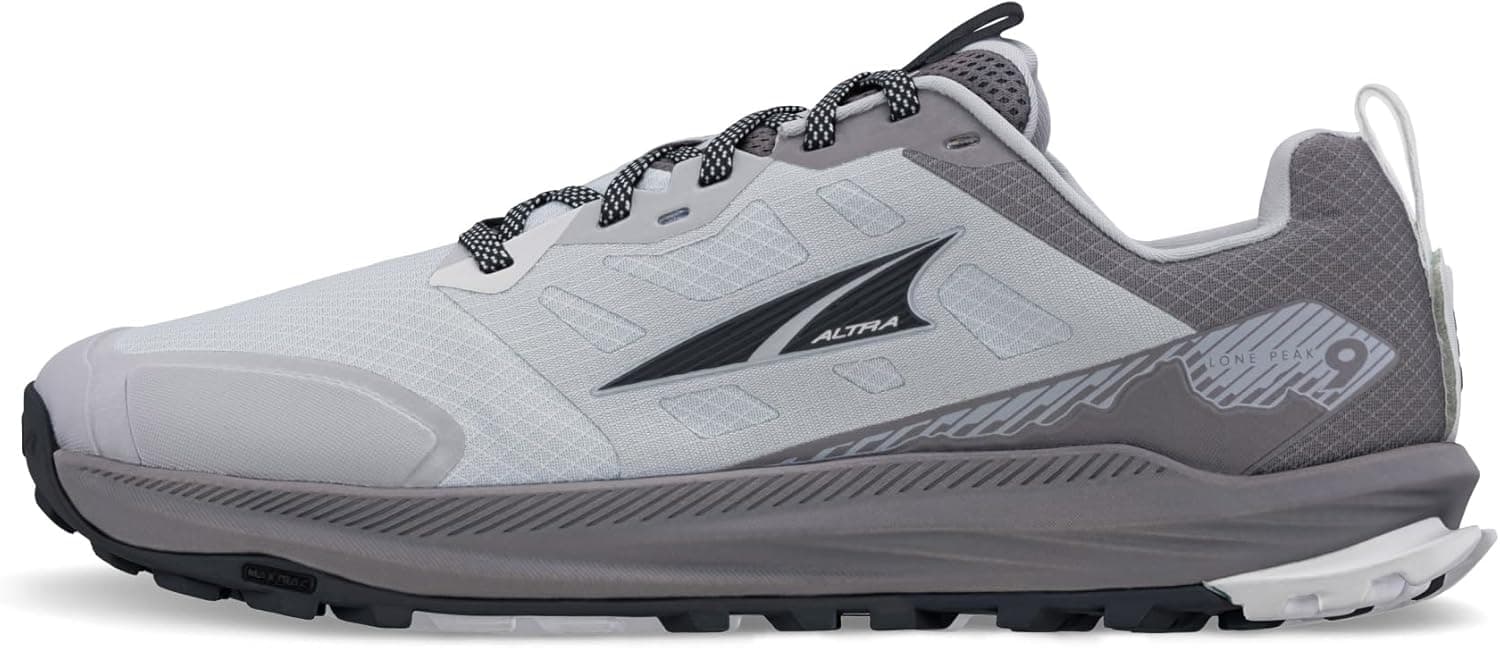
Altra Lone Peak 9 (Trail Runner)
$140
?Estimated price — check latest price on Amazon
Day hikes, thru-hiking, fast-and-light approach
Pros
- ✓Lightweight at roughly 310g per shoe
- ✓Zero-drop platform promotes natural foot position
- ✓Wide toe box allows toes to spread for balance
- ✓Excellent ground feel for proprioceptive feedback
Cons
- ✕No waterproof membrane (mesh upper)
- ✕Less protection on sharp rocky terrain
- ✕Wears out faster (500-800km typical lifespan)
- ✕No debris protection around ankle
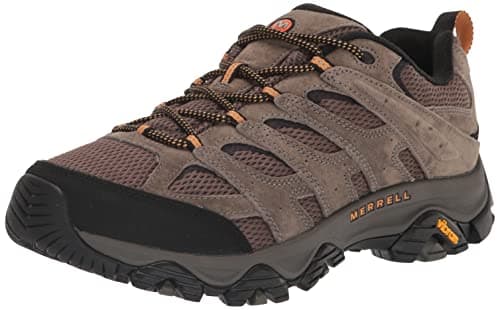
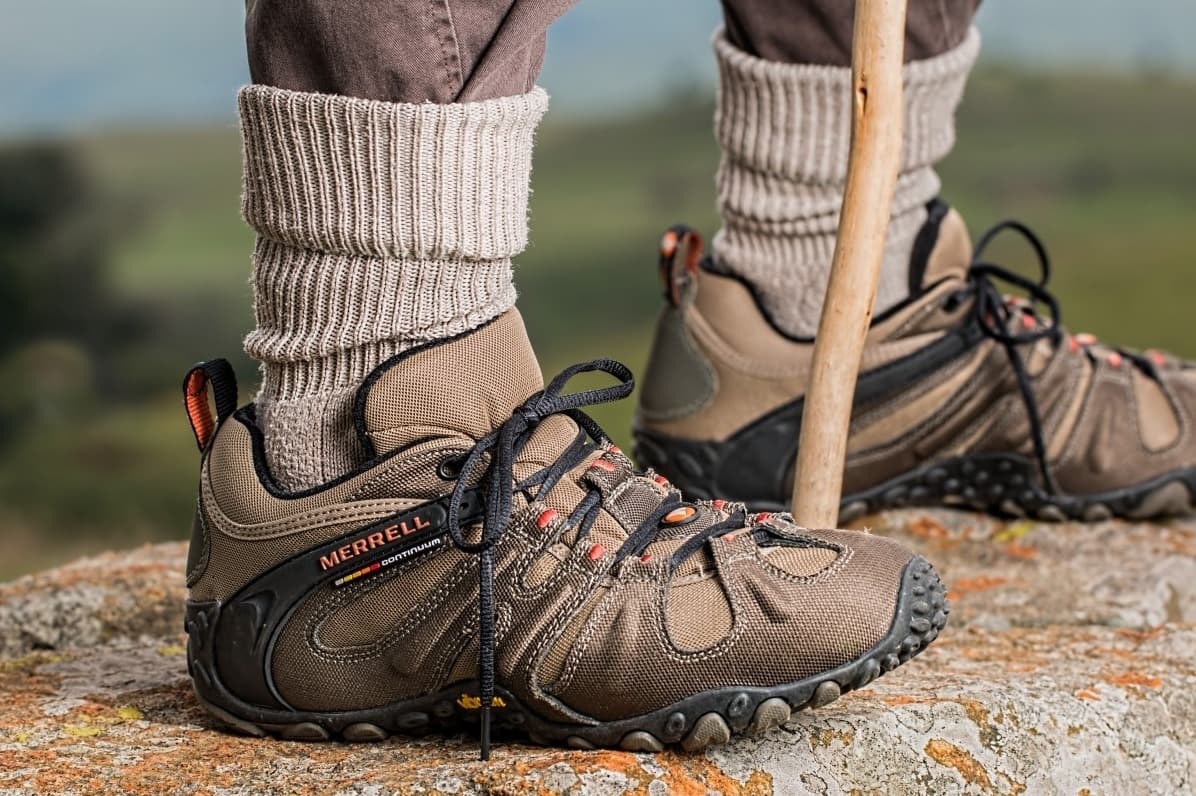
Merrell Moab 3 (Low-Cut Hiker)
$90
?Estimated price — check latest price on Amazon
All-round day hiking, moderate terrain
Pros
- ✓Vibram outsole with excellent traction
- ✓Comfortable straight out of the box
- ✓Good middle ground between boots and runners
- ✓Affordable at $90
Cons
- ✕Standard version not waterproof
- ✕Less cushioning than dedicated trail runners
- ✕Moderate durability on technical terrain
- ✕Limited colour options
How to Actually Prevent Ankle Injuries on the Trail
If boot height isn't the primary factor in preventing ankle sprains, what is? The research points to four things you can control.
Train Your Proprioception
This is the single most effective thing you can do. Balance exercises strengthen the small stabilising muscles around your ankle and improve your body's reaction speed to uneven surfaces.
Start with single-leg stands: lift one foot off the ground and hold for 30 seconds, then switch. Once that's easy, close your eyes. Then try it on a soft surface like a pillow. Progress to a wobble board if you have access to one. Ten minutes of balance work, three to four times a week, produces measurable improvements within six weeks.
Strengthen Your Lower Legs
Strong calves and shin muscles support the ankle joint from multiple angles. Calf raises (3 sets of 15, both straight-leg and bent-knee) and resistance band exercises for ankle eversion and inversion build the muscular framework that prevents rolls.
Use Trekking Poles
Trekking poles reduce the load on your lower limbs by roughly 25% on descents. They also provide two additional points of contact with the ground, which dramatically reduces the chance of a stumble turning into a fall. A pair of TrailBuddy Trekking Poles weighs just 280g per pole and collapses to 60cm for stowing.
Choose the Right Footwear for the Terrain
This is where the boots vs trail runners debate gets practical. Match your footwear to the conditions rather than defaulting to one option.
Use trail runners when: the trail is well-maintained, your pack is under 10kg, conditions are dry, and you've built up ankle strength through training.
Use boots when: you're carrying a heavy pack (15kg+), conditions are wet or snowy, the terrain involves scrambling or scree, or you're recovering from an ankle injury.
The Salomon X Ultra 5 Mid GTX is an interesting middle option. It's a mid-cut hiking shoe with more structure and protection than a trail runner, but lighter and more agile than a stiff backpacking boot. For hikers who want something between the two extremes, it's worth considering.
The "One Shoe for Everything" Trap
One of the biggest mistakes hikers make is buying a single pair of footwear and using it for every situation. Your feet and ankles perform differently on a flat canal path versus a rocky mountain descent, and so do your knees (see our best hiking boots for bad knees). The forces, the terrain, the pack weight, and the duration all change what your feet need.
Many experienced hikers own two or three pairs: a lightweight trail runner for summer day hikes, a sturdy mid-cut boot for multi-day winter trips, and perhaps a low-cut hiking shoe for everything in between. This isn't about spending more money. It's about using the right tool for the job, the same way you wouldn't use a single jacket for both July and January.
If your budget only allows one pair, the Merrell Moab 3 or Salomon X Ultra 5 Mid GTX are versatile compromises. Neither is perfect for every situation, but both handle a wide range of conditions competently.
For more on choosing the right hiking shoes, our guide to cheap hiking shoes and boots covers the best options at every price point. And if you're curious about whether your current boots are actually suitable, our Timberland hiking review digs into what separates real trail footwear from fashion boots. You might also find our Altra vs Topo Athletic comparison useful if you're leaning toward the trail runner route.
Last updated on June 21, 2026.

Jasper Baetens
Hiking enthusiast from Belgium, mainly active in Europe. Created HikeHeaven to share experiences, research, tips, tricks and product recommendations, or simply to help other hikers.