Topo vs Hoka: Which Trail Running Shoe Brand Fits You?
Topo vs Hoka compared: toe box width, drop, cushioning, fit and seven model match-ups from Ultraventure vs Speedgoat to the road. Find your pick.

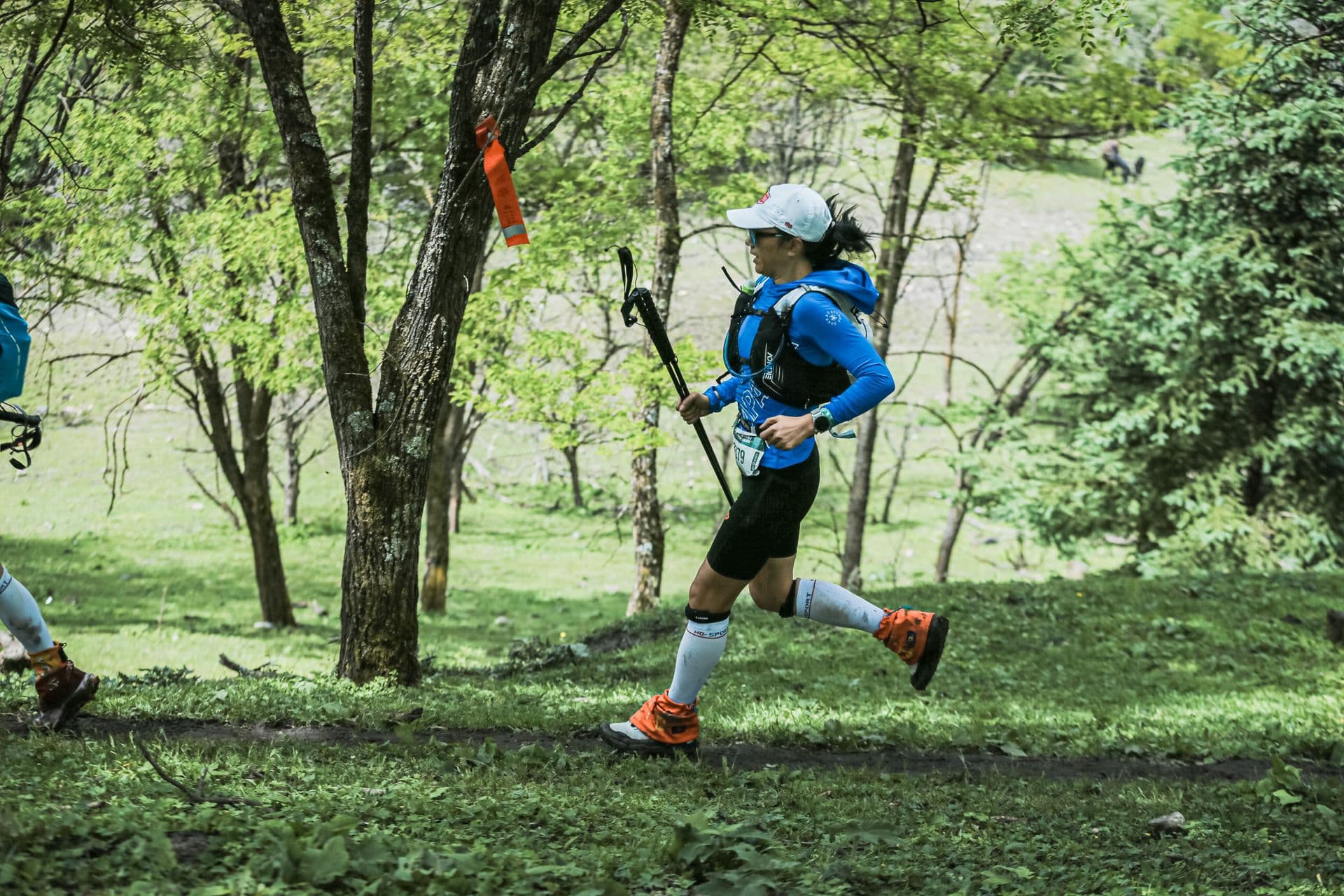
Topo vs Hoka comes down to one question: do you want room for your toes or a soft, rolling ride? Topo Athletic builds shoes around a wide, foot-shaped toe box and a low drop of 0 to 5mm. Hoka builds them around deep cushioning and a rocker sole, with a 4 to 8mm drop and a snugger forefoot. If your toes go numb or rub on long runs, start with Topo. If your legs take a beating on long descents, start with Hoka.
The two brands overlap more than you'd think, and several models line up almost spec for spec. This guide covers how they differ and which pair to pick for seven types of running, plus a hiking match-up at the end.
What runners say
Topo Athletic
The pick for runners who want Altra-style toe room without going fully zero drop.
Praised for
- A roomy, foot-shaped toe box
- Secure heel and midfoot hold
- Low drop that's easy to adapt to
- Vibram outsoles on most trail models
Common complaints
- Forefoot can shift on steep, technical ground
- Less exciting, firmer ride than Hoka's foams
- Fewer shops stock it, so trying pairs is harder
- Some models feel clunky on fast, runnable trail
Hoka
The cushioning specialist, with a rocker that makes long miles feel easier.
Praised for
- Deep, protective cushioning
- Smooth, rolling ride from the Meta-Rocker
- Great grip on the Speedgoat and Mafate
- Wide (2E) versions of many models
Common complaints
- Narrow toe box, especially on the Speedgoat
- Trail models that run about half a size small
- Tall stacks that feel tippy on rough ground
- Foam that can go flat after 300 to 500 miles
Based on recurring feedback from runners on Reddit, BackpackingLight and retailer reviews, plus RunRepeat lab measurements and independent reviews from Believe in the Run, Road Trail Run and Doctors of Running.
Topo vs Hoka at a Glance
| Topo Athletic | Hoka | |
|---|---|---|
| Founded | 2013, Massachusetts | 2009, Annecy, France |
| Signature idea | Foot-shaped toe box, low drop | Max cushion and a Meta-Rocker |
| Typical drop | 0 to 5mm | 4 to 8mm |
| Typical stack height | 28 to 40mm | 38 to 44mm |
| Toe box | Wide and rounded | Medium to narrow |
| Best-known shoes | Ultraventure 5, Phantom 4 | Speedgoat 7, Clifton 11 |
| Typical price | $135 to $175 | $150 to $185 |
Brand Overview
Topo Athletic: Toe Room With a Little Drop
Topo Athletic was founded in 2013 by Tony Post, who previously ran Vibram USA during the FiveFingers boom. The idea was simple. Keep the anatomical toe box that minimalist runners loved, but add proper cushioning and a small heel drop so ordinary runners could wear the shoes every day.
That middle ground is still Topo's identity. Most models have a 5mm drop, a few go down to 3mm or zero, and almost all of them use Vibram rubber on the trail. If you've read our Altra vs Topo Athletic comparison, you'll know Topo sits between Altra's zero-drop world and a conventional running shoe.
Hoka: Maximum Cushion, Rolling Ride
Hoka started in the French Alps in 2009, founded by two former Salomon employees who wanted to run downhill faster. Deckers bought the brand in 2013, and its oversized midsoles went from oddity to the most copied look in running.
The signature is the Meta-Rocker, a curved sole that rolls you from landing to toe-off. Paired with stacks of 38 to 44mm on most models, it makes tired legs feel fresher late in a run. The trade-off is a more tapered forefoot, which our Altra vs Hoka guide covers in detail.
Toe Box and Fit
Winner: Topo. This is the clearest difference between the brands, and RunRepeat's lab numbers back it up. It measured the toe box of the Topo Ultraventure 4 at 83.0mm wide, against 71.4mm for the Hoka Speedgoat 7. The average across the trail shoes RunRepeat has tested is about 74mm, so Topo sits well above it and Hoka sits below.
You feel that 11mm straight away. Your toes can spread when you land, which matters most late in a long run when your feet swell. On Reddit, runners who switched from Hoka to Topo often mention fewer blisters and no more black toenails.
There's a catch, though. Topo's roomy forefoot can let your foot slide on steep, off-camber descents, and several reviewers flagged this on the Ultraventure 5 and Vista. Lock the heel with a runner's loop if that happens.
Sizing differs too. Topo generally runs true to size. Hoka trail shoes, especially the Speedgoat, run about half a size small, so many runners size up.
Heel Drop and Cushioning
Winner: Hoka for cushioning, Topo for a lower drop. Drop is the height difference between your heel and forefoot. Most Topo shoes have 5mm, the Pursuit 3 and Magnifly have zero, and the Terraventure 5 has 3mm. Hoka sits between 4 and 8mm.
A 5mm drop is easy to adapt to. You won't need the long transition that zero-drop shoes demand, but your calves will still do a little more work than in a typical 10mm shoe. Build up over two or three weeks if you're coming from a higher drop.
Hoka wins on raw cushioning. The Mafate 5 stacks 44mm under your heel, while Topo's most cushioned trail shoe, the Vista, has 38mm. Hoka's rocker also does more work for you, especially at easy paces. Topo shoes feel flatter, firmer and more connected to the ground.
Grip and Durability
Winner: tie. Both brands use Vibram rubber on their main trail shoes. Hoka's Speedgoat and Mafate use Vibram Megagrip with deep lugs, and they're among the grippiest shoes you can buy on wet rock. Topo uses Megagrip on the Vista, MTN Racer 4 and Pursuit 3, and Vibram XS Trek Evo on the Ultraventure 5.
Durability is close. Hoka outsoles last well, but its soft midsoles can feel flat after 300 to 500 miles. Topo's ZipFoam is firmer and tends to hold its shape, while its uppers get consistent praise for toughness. Expect 300 to 500 miles from either brand and replace your shoes once the cushioning stops protecting you.
Model Match-Ups
These are the current models as of autumn 2026, paired by the kind of running they're built for. Weights are for a men's US 9, and prices are full retail.
| Running type | Topo Athletic | Hoka |
|---|---|---|
| All-round trail | Ultraventure 5: $155, 303g, 35/30mm, 5mm drop | Speedgoat 7: $165, 272g, 38/33mm, 5mm drop |
| Max cushion trail | Vista: $175, 309g, 38/33mm, 5mm drop | Mafate 5: $185, 315g, 44/36mm, 8mm drop |
| Low drop trail | Pursuit 3: $155, 301g, 28/28mm, 0mm drop | Challenger 8: $155, 275g, 44/37mm, 7mm drop |
| Daily road | Phantom 4: $150, about 255g, 35/30mm, 5mm drop | Clifton 11: $155, 261g, 43/35mm, 8mm drop |
| Max cushion road | Atmos 2: $165, 281g, 40/35mm, 5mm drop | Bondi 9: $175, 306g, 44/39mm, 5mm drop |
| Stability road | Ultrafly 6: $150, 272g, 32/27mm, 5mm drop | Arahi 9: $150, 275g, 41/33mm, 8mm drop |
All-Round Trail: Ultraventure 5 vs Speedgoat 7
This is the match-up most runners are really asking about, and on paper the two are close. Both have a 5mm drop and similar stacks. The difference is the fit and the feel.
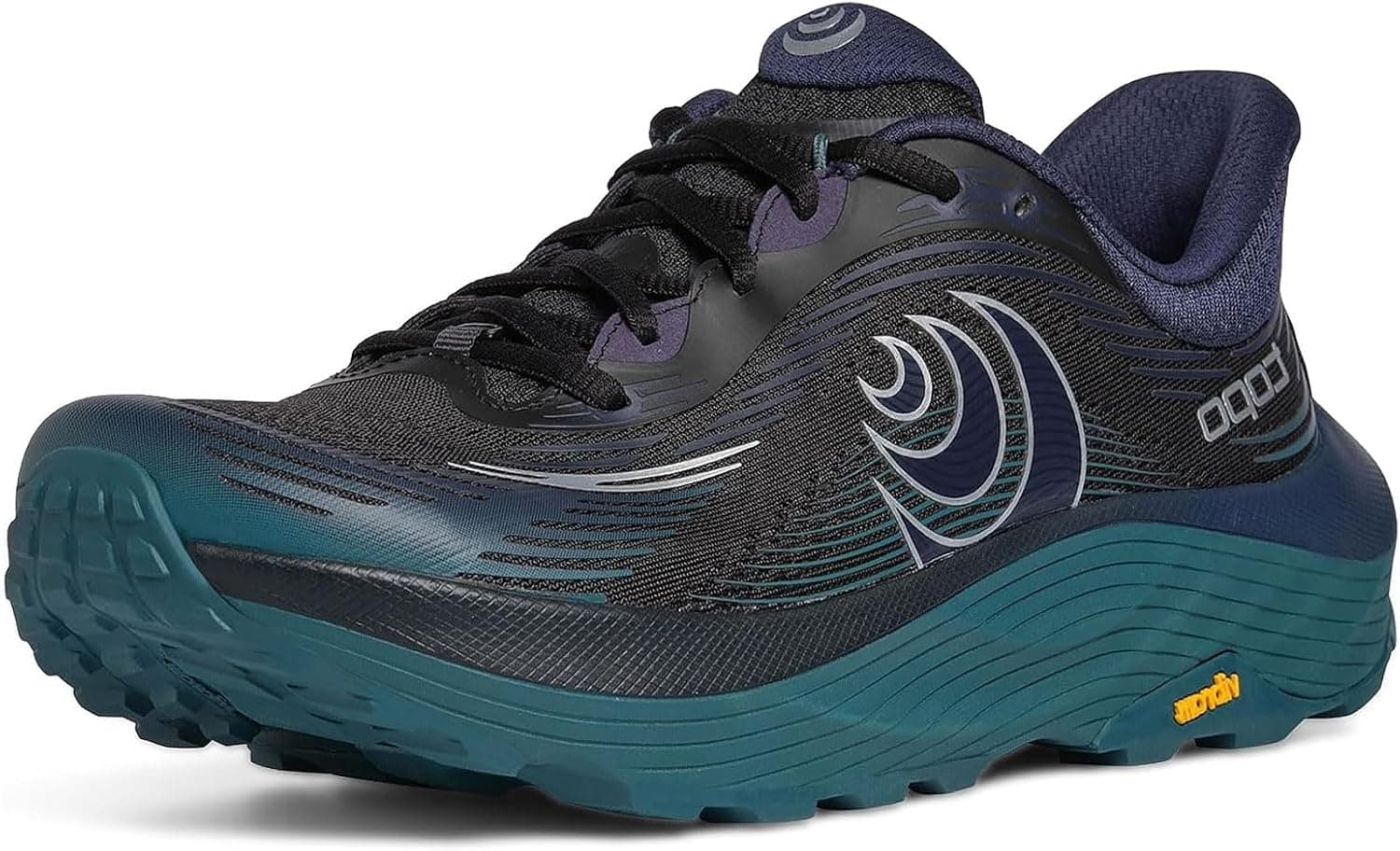
The Topo Ultraventure 5 launched in July 2026 with revised ZipFoam, a gaiter attachment and a roomy, protective upper. It's comfortable for hours and handles mud and wet crossings well, though reviewers found it a little clunky on fast, runnable trail. The Hoka Speedgoat 7 is lighter by about 30g, bouncier and grippier, but much narrower up front.
Topo Ultraventure 5 vs Hoka Speedgoat 7
Topo Ultraventure 5
Wide feet, long days and ultras on moderate trails
Pros
- ✓Much wider toe box for swollen feet
- ✓Secure heel and midfoot hold
- ✓Built-in gaiter attachment
- ✓True to size and $10 cheaper
Cons
- ✕Forefoot can shift on technical descents
- ✕Heavier at about 303g
- ✕Firmer, less lively ride
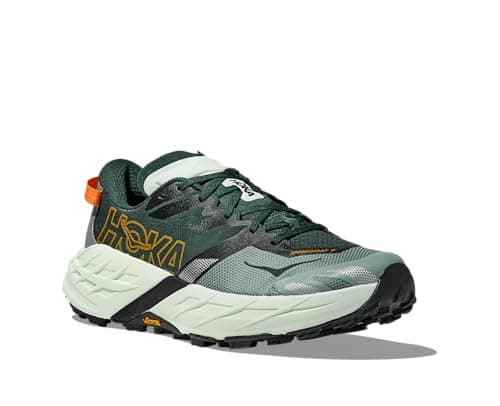
Hoka Speedgoat 7
Narrow to medium feet, steep mountain trails and racing
Pros
- ✓Lighter at about 272g
- ✓Vibram Megagrip with deep lugs
- ✓Soft, rolling ride for long descents
- ✓Durable outsole in lab testing
Cons
- ✕Narrow toe box, 71.4mm in RunRepeat's test
- ✕Runs about half a size small
- ✕Less stable on rough, rocky ground
If you want something faster and more locked-in from Topo, the Topo MTN Racer 4 is the closer rival to the Speedgoat. It's lower at 33/28mm, has Megagrip and a more secure upper, and costs the same $155.
Max Cushion Trail: Vista vs Mafate 5
The Topo Vista is Topo's softest shoe yet, with plush ZipFoam, Megagrip and a wide platform that keeps it stable without a plate. Reviewers loved it for long runs on smooth trail and even for hiking. The Hoka Mafate 5 goes taller at 44mm in the heel, with 5mm lugs for loose, steep mountain ground.
Pick the Vista for big cushioning with room for your toes. Pick the Mafate for maximum protection on rough, technical descents.
Low Drop Trail: Pursuit 3 vs Challenger 8
Hoka doesn't make a zero-drop shoe, so this is where Topo offers something Hoka can't. The Topo Pursuit 3 has 28mm of foam at both ends, Megagrip rubber and a drainage-friendly insole. It's a solid alternative if you like the idea of an Altra Lone Peak but want a more secure heel.
The Hoka Challenger 8 is the opposite approach: tall, soft and road-shoe smooth, built for runs that mix pavement and easy paths. If you want Topo's version of that hybrid, the Topo Terraventure 5 has a 3mm drop and sells for around $135.
Daily Road: Phantom 4 vs Clifton 11
The Topo Phantom 4 is Topo's everyday road trainer, with a 35/30mm stack and the usual wide forefoot. The Hoka Clifton 11 is one of the best-selling running shoes in the world: light, soft and smooth, with an 8mm drop.
Pick the Phantom if road shoes squeeze your toes. Pick the Clifton for a softer ride and an easy switch from a standard trainer.
Max Cushion Road: Atmos 2 vs Bondi 9
The Topo Atmos 2 got 2mm more foam and a softer ZipFoam formula for 2026, bringing it to 40mm at the heel. The Hoka Bondi 9 is still the plushest of the pair at 44mm, and it comes in wide and extra-wide.
Pick the Atmos 2 for recovery runs with a roomy toe box. Pick the Bondi 9 for maximum softness, or if you need a 4E width.
Stability Road: Ultrafly 6 vs Arahi 9
Both guide feet that roll inward. The Topo Ultrafly 6 uses a firmer medial post that wraps the heel, while the Hoka Arahi 9 uses Hoka's J-Frame, a firmer foam that wraps the inside of the shoe. If you overpronate on trails as well, our guide to the best trail running shoes for overpronation has more options.
Topo vs Hoka for Hiking
Plenty of hikers wear both brands, especially on long-distance trails. Topo's hiking shoe is the Topo Traverse 2: $155, 317g, a 30/25mm stack, Megagrip and an abrasion-resistant upper. It's too heavy and stiff for running, but it's a comfortable, roomy day hiker.
Hoka's closest match is the Hoka Anacapa 2 Low GTX, which adds a Gore-Tex membrane, more cushioning and a rocker. It costs more, but it's the better pick if you hike in wet weather or want extra protection for your knees. For more on that, see our best hiking boots for bad knees and our Hoka vs Salomon comparison.
Which Brand Should You Choose?
Choose Topo Athletic if:
- Your toes feel cramped or numb in most running shoes
- You get blisters or black toenails on long runs
- You want a low drop without going fully zero drop
- You like a firmer, more connected feel underfoot
Choose Hoka if:
- You want maximum cushioning for long or downhill runs
- You have tight calves, Achilles trouble or sore knees
- You have narrow to medium feet
- You like a soft, rolling ride
Still torn? Start with the shoe you'll use most. For trail running, try the Topo Ultraventure 5 against the Hoka Speedgoat 7, ideally late in the day when your feet are at their widest. New to running off-road? Our trail running shoes guide explains what to look for.
Frequently Asked Questions

Jasper Baetens
Hiking enthusiast from Belgium, mainly active in Europe. Created HikeHeaven to share experiences, research, tips, tricks and product recommendations, or simply to help other hikers.