Best Hiking Socks: Tested and Ranked for Every Trail
The best hiking socks ranked by material, cushioning, and durability. Merino vs synthetic explained, with picks from Darn Tough, Smartwool, and Injinji.

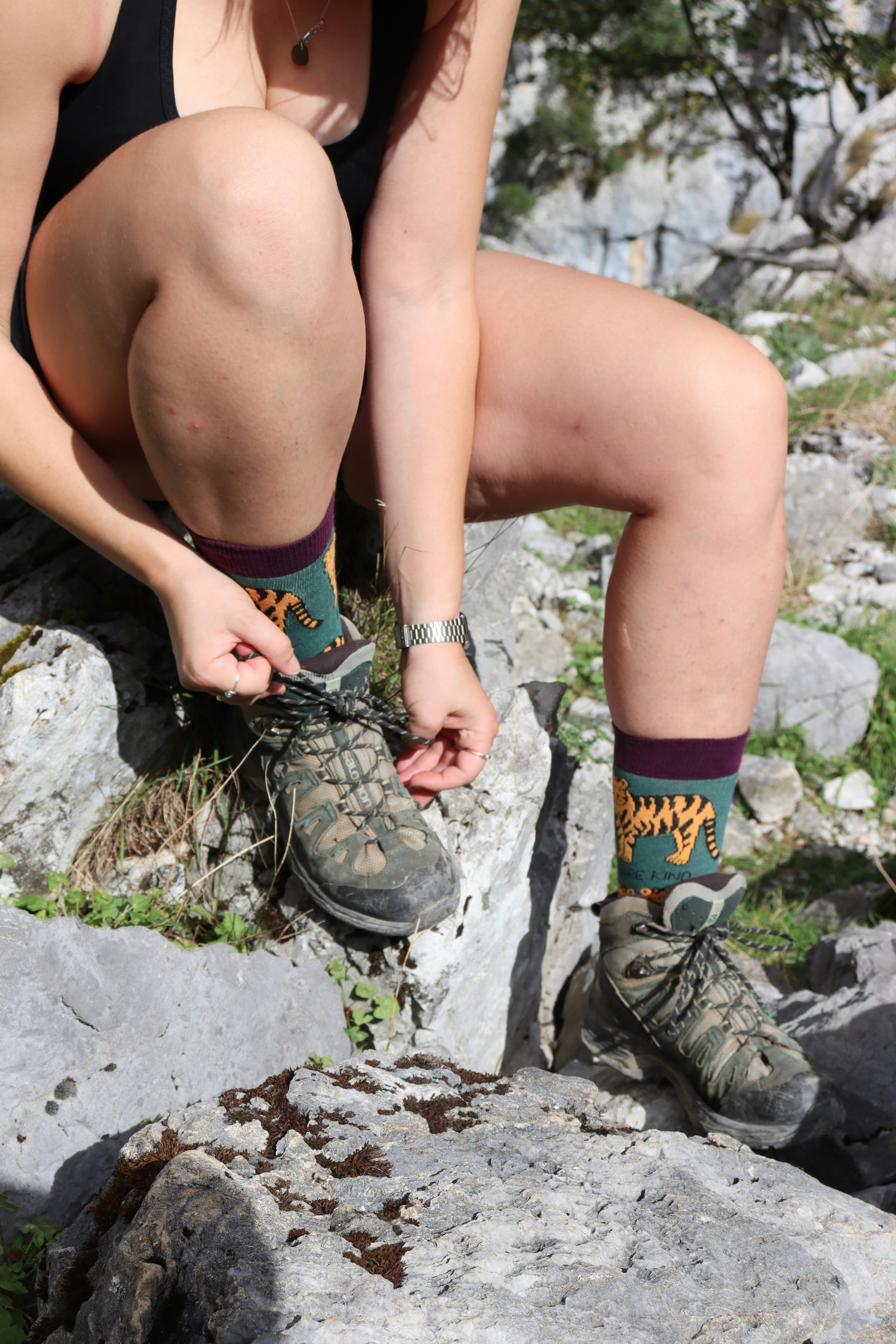
Most hikers spend hours choosing boots and forget entirely about socks. That's the wrong priority. A mediocre boot with excellent socks will outperform a great boot with cotton gym socks on any day over 15 km. Socks determine how your foot sits inside the boot, how moisture is managed, and whether hotspots develop into blisters.
This guide covers the best hiking socks across every category, with specific picks for different conditions and budgets.
What Makes a Good Hiking Sock
Before the recommendations, it's worth understanding what actually separates a hiking sock from a regular one.
Material is the biggest factor. Merino wool regulates temperature, manages moisture, and resists odour far better than cotton or basic synthetics. Cotton holds moisture against your skin, which increases friction and blister risk. On a dry summer day hike, this matters less. On a three-day backpacking trip in wet weather, it matters enormously.
Cushioning affects comfort and protection. More cushioning absorbs impact on hard terrain, but it also adds warmth. Light cushioning suits summer hiking and trail runners. Medium to heavy cushioning reduces fatigue in stiff leather boots on rocky ground.
Height affects warmth and debris protection. Most hikers use crew-height socks for mid-cut and high-cut boots, which keeps the collar above the boot's upper edge and prevents rubbing on the ankle bone.
Durability is what separates budget socks from good ones. Cheap socks pill, develop holes, and lose their shape after a season. A quality pair costs more upfront but lasts years.
The Best Hiking Socks
Darn Tough Hiker Micro Crew: Best Overall
Darn Tough makes socks in Vermont from high-density merino wool, noticeably heavier in construction than most competitors. The Hiker Micro Crew is their core hiking model: medium cushioning, crew height, available in a wide range of colours. The construction is tight enough that you can feel the difference compared to standard merino socks.
The unconditional lifetime guarantee is not marketing. Send back a worn-out pair and they replace it, no questions asked. After years of testing socks from every major brand, this is the one I'd start with for anyone hiking regularly.
Best for: day hiking, backpacking, all-round use Cushioning: medium | Merino content: 61% | Price: around £20
Darn Tough Hiker Micro Crew on AmazonSmartwool PhD Hike Medium Crew: Best Fit
Smartwool's PhD range uses a four-direction stretch construction that fits more precisely than most socks. The medium cushion version sits just below the Darn Tough in thickness but has a noticeably more sculpted fit, with separate reinforcement zones at the heel and ball of the foot.
The Smartwool runs slightly warmer than the equivalent Darn Tough. In cold, wet conditions that's an advantage. On hot summer days, the lighter PhD Hike Light Crew is a better choice from the same range.
Best for: cold-weather hiking, technical terrain Cushioning: medium | Merino content: 55% | Price: around £22
Smartwool PhD Hike Medium Crew on AmazonDarn Tough Light Hiker Micro Crew: Best for Summer
The Light Hiker is the Hiker Micro Crew's thinner sibling. Same high-density merino construction and lifetime guarantee, but with light cushioning rather than medium. This makes it better for hot days, trail runners, and low-cut shoes where extra bulk would be unwelcome.
If you primarily hike in trail runners or low-cut shoes and find your feet overheat, this is the one to choose.
Best for: summer hiking, trail runners, warm-weather trips Cushioning: light | Merino content: 61% | Price: around £20
Darn Tough Light Hiker Micro Crew on AmazonInjinji Trail Midweight Mini Crew: Best for Blister Prevention
Injinji makes toe socks: five separate toe pockets, like a glove for your foot. The premise is that toe-to-toe friction causes a significant proportion of hiking blisters, and separating the toes removes that friction source entirely.
They work. Particularly for people who get blisters between toes or on the little toe, the difference is noticeable from the first long day. The main adjustment is getting used to how they feel, which takes about a day of wear. Injinji also makes a thinner liner version designed to be worn under a regular hiking sock, combining blister protection with the cushioning of a standard sock.
Best for: blister-prone hikers, people with sensitive toes Cushioning: medium | Merino content: 39% (merino blend) | Price: around £18
Injinji Trail Midweight Mini Crew on AmazonWigwam Cool-Lite Hiker Pro: Best Budget Option
Wigwam is an American brand that rarely gets the attention it deserves. The Cool-Lite Hiker Pro is a merino blend sock with a reinforced heel and toe, available at considerably less than the Darn Tough or Smartwool equivalents. The construction is not as tight and it won't last as long, but it performs well on day hikes and multi-day trips alike.
If you're buying your first pair of proper hiking socks and don't want to spend £20, start here.
Best for: budget buyers, occasional hikers Cushioning: medium | Merino content: 40% | Price: around £12
Wigwam Cool-Lite Hiker Pro on AmazonMaterials Explained
Merino Wool
Merino wool is the benchmark material for hiking socks. Its hollow fibre structure regulates temperature in both directions: warmer in cold conditions and cooler in warm ones compared to synthetic fibres. It wicks moisture efficiently and releases it quickly when exposed to air.
Crucially, merino resists odour far better than synthetic materials. On a multi-day trip where you're washing socks infrequently, this makes a real difference by day two. The same fibre logic applies to your base layers, which is why merino wool hiking shirts are worth the investment too.
The main downsides are cost and, for pure merino, durability. Most high-quality hiking socks blend merino with nylon (typically 20 to 30% nylon) to improve abrasion resistance without sacrificing much performance. The Darn Tough, for example, uses a 61% merino, 27% nylon, 12% Lycra blend that handles the abrasion of leather boots well.
Synthetic (Nylon, Polyester, CoolMax)
Synthetic socks are cheaper, dry faster, and are generally more durable than merino. High-quality synthetic socks from brands like Bridgedale perform well in dry conditions and make a good choice for summer day hiking.
Where they fall short is multi-day use. Synthetics hold odour more than merino and don't regulate temperature as effectively. In wet conditions, they feel clammy against the skin faster.
CoolMax is a branded polyester fibre with a channelled structure designed to wick moisture efficiently. Common in lightweight trail socks and often blended with merino or nylon.
Cotton: Avoid It
Cotton is comfortable in a trainer on a dry day. On the trail, it absorbs moisture, stays wet for hours, and significantly increases blister risk. The same applies to hiking in jeans. In cold conditions, wet cotton contributes to heat loss from your foot.
There is no hiking scenario where cotton is the right sock material. If you only change one thing about your hiking kit, switch from cotton to merino.
How to Choose the Right Thickness
Thickness affects cushioning, warmth, and boot fit. Get it wrong and even a well-fitting boot can feel too tight or too loose.
Light cushion (1 to 3 mm): for trail runners, low-cut shoes, warm weather, and high-output activities where breathability matters more than padding.
Medium cushion (3 to 5 mm): the most versatile option. Works in most hiking boots from synthetic mid-cuts through to lighter leather boots. A good starting point for most hikers.
Heavy cushion (5 mm+): for cold conditions, heavy leather boots, and hikers who want maximum underfoot protection on rocky terrain. Adds significant warmth and reduces fatigue on long days.
Sock Height: Which to Choose
No-show and ankle: for trail runners and very low-cut shoes. Minimal warmth and debris protection, but enough for dry conditions on well-maintained trails.
Micro crew (just above the ankle): the most popular height for hiking. Sits above the collar of most low and mid-cut boots, preventing ankle bone rubbing.
Crew: standard height for high-cut boots. Covers the ankle and lower calf, providing warmth and keeping debris out of the boot.
Over-the-calf: mainly for mountaineering and winter use. Also worth considering for hikers who get chafing from boot collars on long days.
Caring for Merino Socks
Merino is more delicate than synthetics and needs slightly more care to last.
Wash on a cool setting (30°C maximum) and either lay flat to dry or tumble dry on low heat. High heat shrinks merino rapidly. Avoid fabric softener entirely, as it coats the merino fibres and reduces their moisture-wicking ability.
Don't wring merino socks when wet. Press them against the side of a sink and let water drain naturally before laying flat to dry.
A good pair of merino hiking socks, cared for properly, will last years. The Darn Tough lifetime guarantee exists because the company knows their construction outlasts normal wear.
The Bottom Line
The difference between a good hiking sock and a cotton one shows up around mile ten. If you regularly get blisters, start with the Darn Tough Hiker Micro Crew in medium cushion and make sure the thickness matches your boot. If toe blisters are the specific problem, add Injinji toe socks.
For most hikers, two pairs of medium-cushion merino crew socks is all you need. Buy once, look after them, and they'll outlast several pairs of boots.
For more on footwear that works well with quality socks, see the best cheap hiking shoes and boots guide. And if you're breaking in new boots for the first time, the boot break-in guide covers the full process step by step.
Last updated on June 21, 2026.

Jasper Baetens
Hiking enthusiast from Belgium, mainly active in Europe. Created HikeHeaven to share experiences, research, tips, tricks and product recommendations, or simply to help other hikers.