Best Sleeping Pads for Backpacking and Camping
The best sleeping pads reviewed: foam, self-inflating, and inflatable options compared by R-value, weight, and comfort for every budget.

A cold night on the ground can wreck a trip faster than rain or blisters. The best sleeping pads for backpacking insulate you from the earth below and give you enough cushioning to actually sleep. After spending nights on foam, self-inflating, and inflatable pads across Scotland, the Alps, and the Carpathians, here's what genuinely works.
The Three Types of Sleeping Pad Explained
Before looking at specific products, it helps to understand what you're choosing between. Each type makes a different trade-off between weight, bulk, durability, and warmth.
Foam pads are cut from closed-cell foam, typically in an accordion fold. They're indestructible, need zero inflation, and won't ever deflate in the night. The trade-offs are bulk (they strap to the outside of your pack) and a firm sleeping surface that some people find uncomfortable. They're also excellent as emergency seat pads or insulation under an inflatable pad.
Self-inflating pads combine open-cell foam with a thin shell. You open the valve, wait a couple of minutes while the foam expands and draws air in, then top up with a few breaths. They're more comfortable than pure foam and more durable than inflatables, but heavier and bulkier than both extremes.
Inflatable pads use air chambers inside a lightweight shell, often with insulation baffles to trap warmth. They pack down tiny, can be very light, and offer the best comfort-to-weight ratio. The downside is puncture risk. A small hole at midnight on a cold hillside is a real problem, so carry a patch kit.
R-Value: What It Means and What You Need
R-value measures how well a pad resists heat flow. A higher number means better insulation. It's an additive figure, so two pads stacked together combine their R-values.
As a practical guide:
- R1-R2: Summer use on warm ground (above 10°C / 50°F)
- R2-R3: Three-season use, most UK and European hiking conditions
- R4-R5: Cold conditions, shoulder season, high-altitude camping
- R5+: Winter camping, snow travel, sub-zero temperatures
Don't underestimate the ground. Even on a mild summer night, bare earth sits at around 10°C and pulls heat from your body far faster than the air around you. An R2 pad that feels fine in a hut will leave you shivering in a tent.
Quick Comparison
Best Sleeping Pads Compared
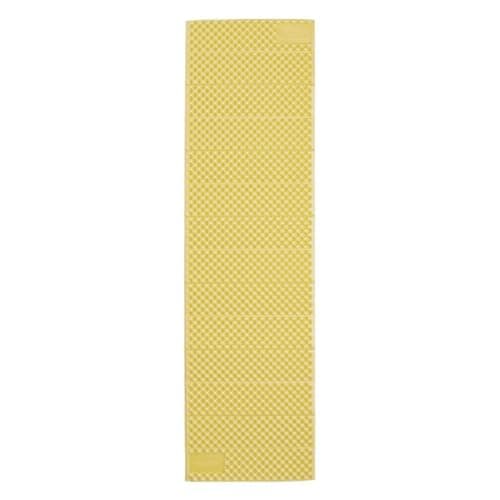
Therm-a-Rest Z-Lite Sol
$55
?Estimated price — check latest price on Amazon
Best foam pad, ultralight base layer
Pros
- ✓Indestructible, no inflation needed
- ✓Doubles as a sit pad or pack frame
- ✓Works in any temperature as a base layer
- ✓Lightweight at 410 g
Cons
- ✕Bulky, straps to outside of pack
- ✕Firm surface, not comfortable for side sleepers
- ✕Lower R-value than inflatables
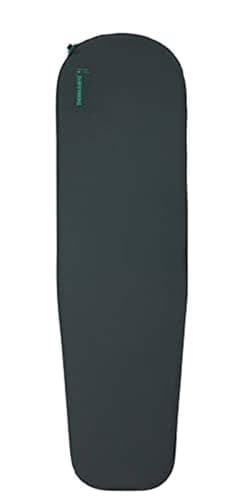
Therm-a-Rest Trail Scout
$75
?Estimated price — check latest price on Amazon
Best self-inflating, car camping and casual backpacking
Pros
- ✓Self-inflates in 2-3 minutes
- ✓Comfortable 3.8 cm foam core
- ✓Durable and puncture-resistant
- ✓Good value for the warmth offered
Cons
- ✕Heavier than inflatable alternatives
- ✕Bulkier packed than air pads
- ✕Takes time to fully inflate
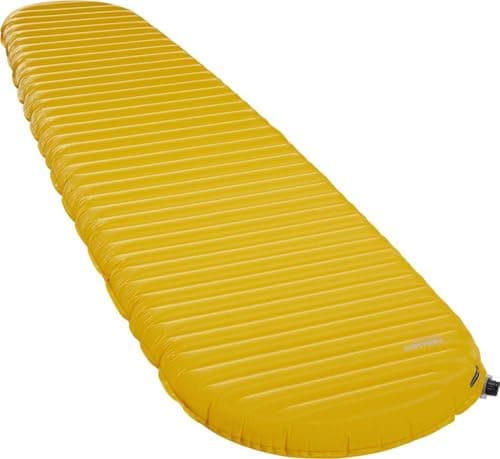
Therm-a-Rest NeoAir XLite NXT
$220
?Estimated price — check latest price on Amazon
Best ultralight inflatable, three-season backpacking
Pros
- ✓R-value of 4.5, warm for its weight
- ✓Packs to the size of a 1L water bottle
- ✓Weighs just 354 g (regular)
- ✓Triangular core matrix for stability
Cons
- ✕Expensive at $220
- ✕Crinkly noise when moving
- ✕Requires patch kit as backup
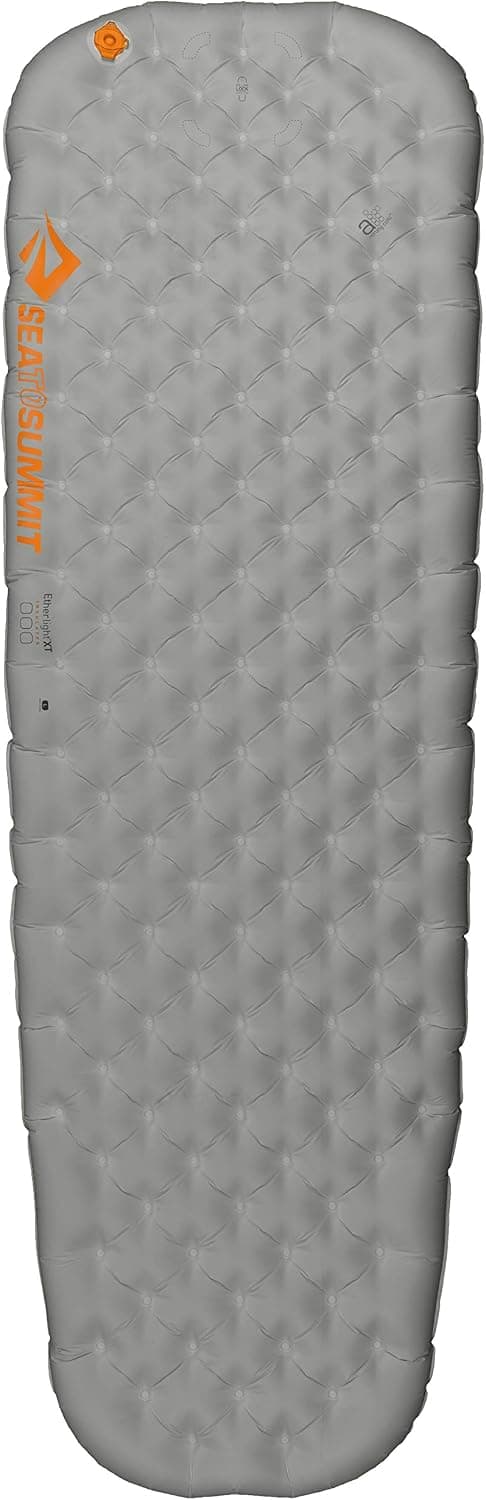
Sea to Summit Ether Light XT
$220
?Estimated price — check latest price on Amazon
Best comfort-focused inflatable, longer trips
Pros
- ✓Exceptionally comfortable for an air pad
- ✓Quiet fabric compared to NeoAir
- ✓R-value of 3.2 (Insulated version: 4.2)
- ✓Large width options available
Cons
- ✕Slightly heavier than NeoAir at the same R-value
- ✕More expensive than budget inflatable options
- ✕Insulated version costs more
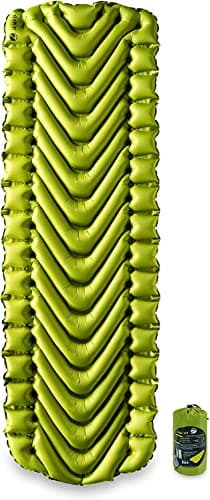
Klymit Static V2
$75
?Estimated price — check latest price on Amazon
Best budget inflatable, warm-weather camping
Pros
- ✓V-chamber design prevents rolling off pad
- ✓Light at 510 g, packs small
- ✓Very affordable for an inflatable
- ✓Durable 75D polyester shell
Cons
- ✕R-value of 1.3, summer use only
- ✕Not warm enough for UK autumn conditions
- ✕Basic insulation compared to premium pads
Best Sleeping Pads in Detail
Therm-a-Rest Z-Lite Sol, Best Foam Pad
The Therm-a-Rest Z-Lite Sol has been a backpacking staple for decades, and there's a reason it's still in production. Open it up, lay it down, sleep. There's nothing to inflate, nothing to puncture, and nothing to adjust. On wild camps in Scotland where I'm exhausted and need to get horizontal fast, this simplicity has real value.
Key specs:
- Weight: 410 g (regular), 540 g (large)
- R-value: 2.0
- Thickness: 2 cm
- Packed size: 56 x 14 x 14 cm (folds to a cylinder)
- Dimensions: 183 x 51 cm (regular)
The reflective silver surface on one side adds warmth by bouncing radiant heat back towards you. With the silver side up, R-value climbs slightly above the base rating. The accordion fold means it straps to the top of your pack rather than fitting inside, which is a genuine trade-off if you're bushwhacking through dense vegetation.
Comfort is polarising. If you sleep on your back or stomach, the Z-Lite is perfectly adequate. Side sleepers often find the 2 cm thickness insufficient for hip padding. Many backpackers pair this pad under an inflatable for combined insulation and puncture protection.
Therm-a-Rest Trail Scout, Best Self-Inflating
The Therm-a-Rest Trail Scout is the entry point for self-inflating comfort. Open the valve at the end of a hiking day, prop it against your pack, and it's mostly inflated by the time you've eaten dinner. A few extra breaths finish the job.
Key specs:
- Weight: 700 g (regular)
- R-value: 2.1
- Thickness: 3.8 cm
- Packed size: 28 x 13 cm
- Dimensions: 183 x 51 cm (regular)
The 3.8 cm foam core is noticeably more comfortable than a 2 cm foam mat, and the self-inflating mechanism means no fussing with valves and pumps. For car camping trips, weekend hut-to-hut routes, or any situation where the extra weight is acceptable, the Trail Scout delivers solid warmth and comfort without a premium price.
The weight is the limiting factor for serious backpackers. At 700 g, it's roughly double the weight of an ultralight inflatable pad with similar insulation. It's also bulkier packed, sitting at the high end of what a pack can accommodate internally.
Therm-a-Rest NeoAir XLite NXT, Best Ultralight
The Therm-a-Rest NeoAir XLite NXT is the benchmark for ultralight warmth. An R-value of 4.5 from a pad that weighs 354 g and packs down to 25 x 10 cm is a genuine achievement. It's what makes multi-day winter-shoulder routes possible without carrying a heavy mat.
Key specs:
- Weight: 354 g (regular), 425 g (large)
- R-value: 4.5
- Thickness: 7.6 cm
- Packed size: 25 x 10 cm (regular)
- Dimensions: 183 x 51 cm (regular)
The triangular core matrix baffles reduce lateral roll compared to older NeoAir designs. ThermaCapture technology, a reflective layer inside the pad, traps radiant heat without adding significant weight. The result is a genuinely warm pad that you can carry on a week-long backpacking trip without noticing its weight in your pack.
The noise is real. The crinkly sound when you shift position in the night can be disruptive, especially in a tent with others. It's something you adapt to, but it's worth knowing before spending $220. Always carry a patch kit and mini pump, as a deflated NeoAir on a cold night is a bad situation.
Sea to Summit Ether Light XT, Best Comfort
The Sea to Summit Ether Light XT prioritises sleeping comfort over raw weight savings. At 490 g (regular) for an R3.2 rating, it's not the lightest option, but the AirSprung cells create a sleeping surface that genuinely mimics a mattress more than a standard air pad.
Key specs:
- Weight: 490 g (regular)
- R-value: 3.2 (Insulated version: 4.2)
- Thickness: 10 cm
- Packed size: 23 x 14 cm (regular)
- Dimensions: 183 x 55 cm (regular)
The AirSprung cell design means the pad surface conforms to your body rather than feeling like one large flat chamber. Side sleepers, in particular, notice the difference on longer trips. The fabric is also notably quieter than the NeoAir, which matters when you're sharing a tent or are a light sleeper.
For a post detailing trekking pole-supported shelter options that pair well with this pad, see our guide to the best trekking pole tents.
Klymit Static V2, Best Budget
The Klymit Static V2 is the answer for backpackers who want an inflatable pad without the premium price tag. At $75, it's less than half the cost of the NeoAir or Ether Light, and it delivers on comfort for warm-weather use.
Key specs:
- Weight: 510 g (regular)
- R-value: 1.3
- Thickness: 6.3 cm
- Packed size: 20 x 10 cm
- Dimensions: 183 x 58 cm (regular)
The V-shaped air chambers run along the length of the pad and are sized to sit in the spaces between your body's pressure points. This reduces the tendency to roll off the pad compared to uniform baffled designs. The 75D polyester shell is genuinely durable for the price.
The R-value of 1.3 is the critical limitation. This pad is suitable for summer camping in mild conditions. For UK or Alpine autumn camping, you'll want at minimum R2.5 to R3. Pair it with a Z-Lite underneath for a combined system that covers three-season camping at a reasonable total cost.
How to Choose the Right Sleeping Pad
Start with R-value. Work out the coldest conditions you'll camp in and choose accordingly. A pad that's too warm is just heavier than necessary; a pad that's too cold will ruin your sleep and affect your safety.
Consider your sleeping position. Back sleepers can get away with thinner pads. Side sleepers need more thickness and surface conformability, which points to inflatables with wider cell designs.
Match pad type to trip type. Foam pads suit routes where you need robustness and simplicity. Inflatables suit trips where pack weight is the priority. Self-inflating pads are the practical middle ground for most car camping and casual backpacking.
For shelter decisions to pair with your pad choice, our guide to ultralight 4-season tents covers what to look for in cold-weather camping shelters.
Sleeping Pad Pairing Guide
Sleeping Pad Setups for Different Trip Types
- Therm-a-Rest Z-Lite SolEssential
Summer day hikes with planned bivouac, or base layer under an inflatable for cold-weather trips
Budget warm-weather backpacking, festival camping, summer wild camping
Weekend camping, car camping, hut-to-hut routes where weight is secondary to comfort
Multi-night backpacking with side sleepers or comfort-focused hikers, three-season UK/European trips
Weight-conscious backpacking, shoulder-season routes, any trip where pack weight matters most
Frequently Asked Questions
The right sleeping pad makes the difference between waking up rested and waking up cold and stiff. For most three-season backpackers, the NeoAir XLite NXT is the benchmark: light, warm, and small enough to ignore in your pack. On a tighter budget, pairing the Z-Lite Sol with the Klymit Static V2 gets you to a three-season system for under $130.
Last updated on June 21, 2026.

Jasper Baetens
Hiking enthusiast from Belgium, mainly active in Europe. Created HikeHeaven to share experiences, research, tips, tricks and product recommendations, or simply to help other hikers.