Best Trekking Pole Tents for Ultralight Backpacking (2026)
The 5 best trekking pole tents from budget to premium. Lanshan 2, River Country, Zpacks Duplex, Hyperlite Ultamid 2 and Six Moon compared.

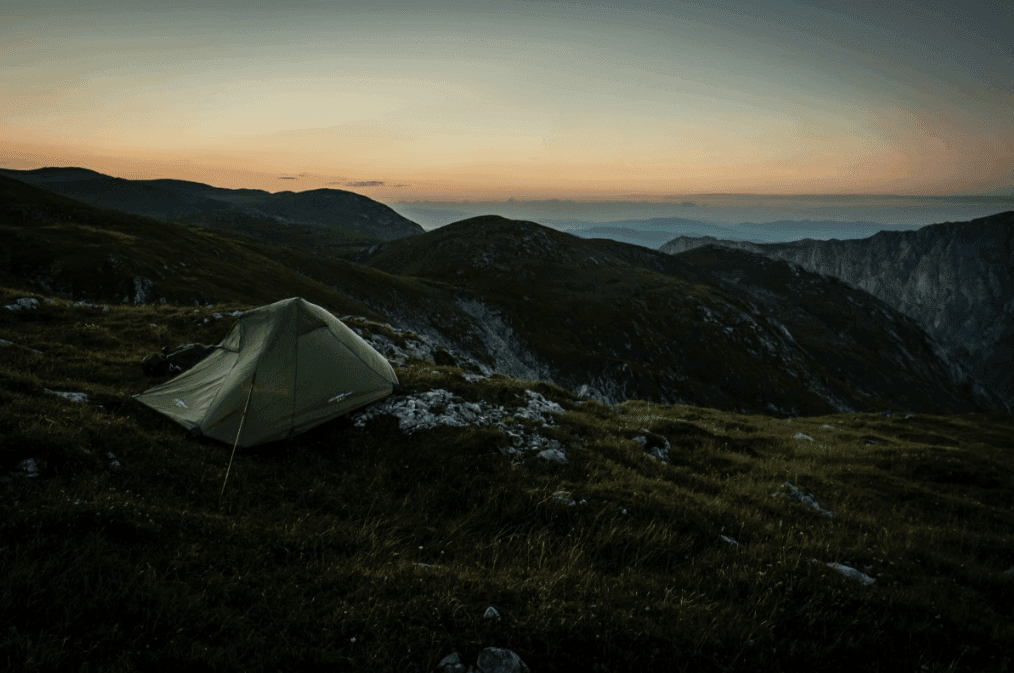
Trekking pole tents are one of the simplest ways to cut weight from your pack. Instead of carrying dedicated tent poles (which typically add 400-700g on their own), you use the trekking poles you're already hiking with as the tent's structural support. The result is a shelter that weighs less, packs smaller, and gives your poles a second job.
I've tested five of the best trekking pole tents across a range of budgets, from a $70 entry-level option to a $600 Dyneema ultralight. Planning your first thru-hike? There's a forgiving budget pick here. Shaving grams off an already dialled-in kit? The premium Dyneema options are waiting for you too.
Why Choose a Trekking Pole Tent?
The appeal is straightforward: you eliminate an entire component from your gear list. A typical freestanding tent comes with aluminium poles weighing 400-700g. A trekking pole tent replaces those with the poles you already carry, meaning the shelter weight drops significantly. Many options here sit between 800g and 1.1kg total.
That weight saving compounds over distance. On a week-long route, the difference between a 2.5kg freestanding tent and a 1kg trekking pole tent means roughly 1.5kg less on your back every single day. Your knees, feet, and energy levels will notice. Pair the right shelter with one of the best sleeping pads and you've cut serious weight from the heaviest items in your kit.
The trade-off is setup time and convenience. Freestanding tents pitch in seconds and can be moved around once erected. Trekking pole tents require staking out and a bit of practice to get the pitch right. They also need your poles, so if a pole breaks mid-trail, you need a backup plan.
The 5 Best Trekking Pole Tents Compared
Best Trekking Pole Tents
Hyperlite Mountain Gear Ultamid 2
$$$
?Estimated price — check Amazon for the latest price
Premium ultralight thru-hikers
Pros
- ✓Dyneema Composite Fabric, ultralight and durable
- ✓Modular: fly only at 530g (1.17 lbs), full setup at 1.05kg (2.32 lbs)
- ✓Pyramid shape sheds wind and rain effectively
- ✓Generous interior space: 5/5 rating
- ✓Single-wall simplicity with minimal condensation
Cons
- ✕Premium price: $$$$
- ✕Not available on Amazon, direct from Hyperlite only
- ✕Requires separate inner net (sold separately)
- ✕Pyramid design needs practice to pitch well
Zpacks Duplex
$$$
?Estimated price — check Amazon for the latest price
Gram-counting thru-hikers with budget to match
Pros
- ✓Incredibly light at just 820g (1.80 lbs)
- ✓Dyneema Composite Fabric, strong for its weight
- ✓Good interior space for 2 hikers: 4/5 rating
- ✓Dual entry/exit doors for convenience
- ✓Proven on the AT, PCT, and CDT
Cons
- ✕Very expensive at around $600
- ✕Not available on Amazon, direct from Zpacks only
- ✕Condensation can be an issue in humid conditions
- ✕Requires careful staking for a taut pitch
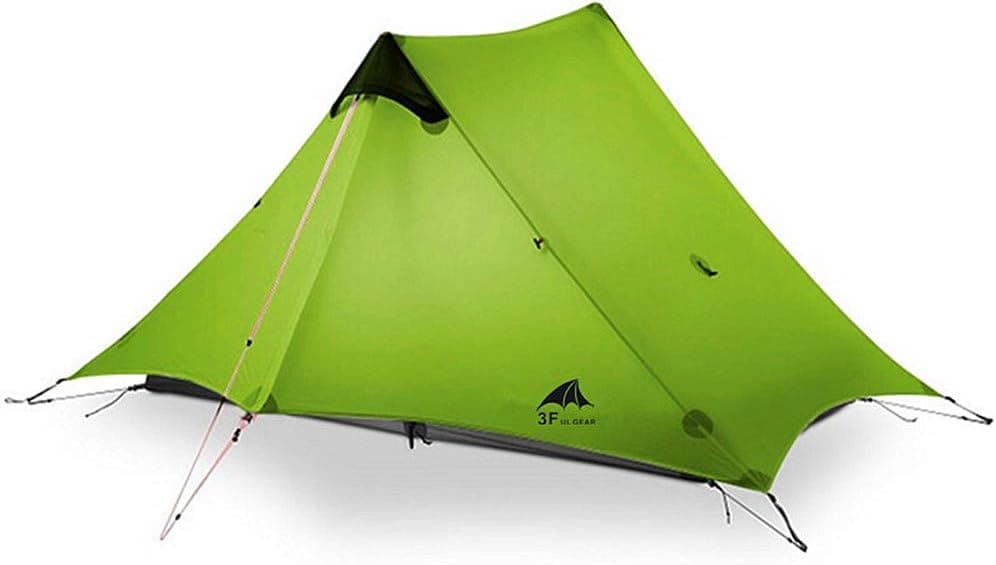
3F UL Gear Lanshan 2
$188
?Estimated price — check latest price on Amazon
Budget-friendly ultralight hikers
Pros
- ✓Strong value at around $188
- ✓Lightweight at 1.1kg (2.44 lbs)
- ✓Double-wall design reduces condensation
- ✓Proven on PCT and other long trails
- ✓Available on Amazon with easy returns
Cons
- ✕Default pegs are flimsy, upgrade recommended
- ✕Interior space is modest: 3/5 rating
- ✕Stitching quality inconsistent on some units
- ✕Requires good staking technique for a solid pitch
River Country Trekking Pole Tent 2.2
$70
?Estimated price — check Amazon for the latest price
First-time ultralight campers on a tight budget
Pros
- ✓Cheapest option at around $70
- ✓Improved ventilation over the 2.0 version
- ✓Double-wall design with mesh inner
- ✓Decent weather protection for the price
- ✓Simple, forgiving pitch for a first attempt
Cons
- ✕No longer listed on Amazon, buy direct
- ✕Heaviest here at 1.5kg (3.31 lbs)
- ✕Limited interior space: 3/5 rating
- ✕Build quality reflects the budget price
- ✕Not ideal for sustained heavy rain

Six Moon Designs Lunar Solo
$270
?Estimated price — check latest price on Amazon
Solo hikers wanting the best weight-to-space ratio
Pros
- ✓Very light at 740g (26 oz) for a 1-person tent
- ✓Good interior space for a solo shelter: 4/5 rating
- ✓Single-wall hexagonal design pitches with one pole
- ✓Proven design with dedicated following
- ✓Available on Amazon
Cons
- ✕1-person only, no option for two hikers
- ✕Single-wall design can collect condensation
- ✕Setup takes practice to get a taut pitch
- ✕Single entry can feel restrictive
Hyperlite Mountain Gear Ultamid 2: Best Premium Pyramid Tent
The Hyperlite Ultamid 2 takes the pyramid shelter concept and executes it in Dyneema Composite Fabric (DCF), one of the lightest and strongest materials available for tent construction. The fly alone weighs just 530g (1.17 lbs). Add the optional mesh inner and you're at 1.05kg (2.32 lbs) for a full 2-person shelter with bug protection.
What makes the Ultamid 2 stand out is its modularity. On clear summer nights, you can pitch the fly alone for a sub-600g shelter. When bugs are a problem, add the inner. In foul weather, the pyramid shape sheds wind and rain beautifully. It's one of the most storm-worthy ultralight designs you can buy.
The interior space is generous. The pyramid shape means the centre height is impressive, and two hikers can sit up comfortably with gear stored inside. It's the roomiest shelter on this list by a clear margin.
The catch is the price. The Ultamid 2 is a premium product with a premium cost, and you can only buy it directly from Hyperlite Mountain Gear's website. It's not sold through Amazon or other retailers. If your budget allows it and you value the weight savings, it's a remarkable piece of engineering. For genuine winter use, though, look at a dedicated ultralight 4-season tent instead, as the Ultamid is built for three-season storms rather than heavy snow loading.
Zpacks Duplex: Lightest 2-Person Option
At just 820g (1.80 lbs), the Zpacks Duplex is the lightest 2-person shelter on this list, and one of the lightest on the market full stop. It's built from Dyneema Composite Fabric and uses two trekking poles for an A-frame-style pitch that creates a surprisingly spacious interior.
The Duplex has earned its reputation on America's long trails. PCT, AT, and CDT thru-hikers have collectively logged tens of thousands of miles under this tent, and it holds up. The dual doors and vestibules mean both occupants get their own entry, which makes a real difference over weeks of shared camping.
Condensation is the main concern with single-wall DCF shelters, and the Duplex is no exception. In humid conditions or when temperatures drop sharply overnight, you'll likely find moisture on the interior walls. Good site selection (airflow, not in a valley bottom) and leaving the doors slightly cracked helps significantly.
Like the Hyperlite, the Zpacks Duplex is only available direct from the manufacturer. At around $600, it's a serious investment, but if you're counting every gram on a long trail, the weight savings are difficult to match with any other 2-person shelter.
3F UL Gear Lanshan 2: Best Value
The 3F UL Gear Lanshan 2 is the entry point for ultralight trekking pole camping without spending Dyneema money. At around $188 and 1.1kg (2.44 lbs), it offers a double-wall design, meaning a separate fly and mesh inner, that most shelters near this price simply can't match.
You may have seen this tent sold under other brand names. For years it was rebadged and resold, most visibly as the MIER Ultralight Tent, which has since disappeared from Amazon. The 3F UL Gear original is the one still in production, so that's what's linked here.
The double-wall construction is the key advantage. Where the Zpacks and Hyperlite rely on single-wall designs that can suffer from condensation, the Lanshan's separate mesh inner and waterproof fly provide an air gap that dramatically reduces moisture build-up inside the tent. For hikers in humid climates or those camping near water, this matters.
I've seen this tent used successfully on the PCT, and it handles three-season conditions well. The 15D silnylon fly is rated above 5,000mm and provides reliable rain protection in moderate conditions. The fabric quality is good for the price, though it asks for more care than a heavier nylon.
The weak point is the included pegs. The default aluminium stakes are lightweight but flimsy. They bend easily in rocky ground and don't hold well in soft soil. Budget an extra $15-20 for a set of quality titanium or MSR Groundhog stakes. It's a small investment that transforms the tent's reliability.
Interior space is modest, rated 3 out of 5. Two hikers can sleep comfortably, but you won't have much room for gear inside. Store packs in the vestibule or under the fly overhang.
River Country Trekking Pole Tent 2.2: Best Budget Option
The River Country Trekking Pole Tent 2.2 is the cheapest way to try trekking pole camping. At around $70 and 1.5kg (3.31 lbs), it's heavier than the other options here, but it still undercuts most freestanding tents on both weight and price.
The 2.2 version is a meaningful upgrade over the older 2.0 model, with improved ventilation panels that help manage condensation. The double-wall design includes a mesh inner tent and a separate rain fly, and the bathtub-style floor keeps ground moisture out.
This is not a tent for severe weather. The stitching and fabric quality reflect the $70 price point, and heavy, sustained rain will test its limits. But for fair-weather camping, summer thru-hikes, and hikers who want to try the trekking pole tent concept before investing in something more expensive, the River Country 2.2 does the job.
Best for: Hikers on a tight budget who want to experiment with trekking pole tents before committing to a premium option.
Six Moon Designs Lunar Solo: Best Solo Tent
The Six Moon Designs Lunar Solo is purpose-built for solo hikers. At 740g (26 oz), it's lighter than most 1-person freestanding tents and provides good interior space for a single occupant, enough to sit up comfortably and store a pack beside you.
The Lunar Solo uses a single trekking pole in the centre, supplemented by stakes that pull the hexagonal canopy taut at six points. The result is a roomy single-wall shelter with a generous vestibule for gear. The bathtub floor and steep walls give you solid weather protection for a tent at this weight.
The main caveat is condensation. The Lunar Solo is a single-wall design, so on humid nights or when temperatures drop sharply, you'll likely find moisture on the inner canopy. Pitch with the vents open and pick a campsite with airflow rather than a damp valley bottom, and you'll keep it under control.
Tips for Trekking Pole Tent Camping
Carry Backup Cord
If a trekking pole breaks on the trail, your tent loses its structure. Carry 3-4 metres of paracord as a backup. You can tie it between two trees to create a ridgeline and hang the tent from that instead. It's not as taut as a pole pitch, but it gets you through the night.
Practice at Home First
Every trekking pole tent pitches differently. Spend 20 minutes in the garden getting the staking sequence right before you're setting up in the dark after a long day. The order in which you stake the corners and guy lines matters. Most tents have a specific sequence that produces the tightest, most weatherproof pitch.
Natural Alternatives
In a genuine emergency, a sturdy branch can substitute for a broken trekking pole. Look for a straight branch roughly the same length as your pole, trim any protruding knots, and use it as a temporary replacement. It won't be perfect, but paired with solid staking, it works.
Invest in Quality Poles
Your trekking poles are now doing double duty as tent support, so reliability matters more than ever. Budget options with plastic locking mechanisms can fail at the worst moment. Consider a solid pair like the TrailBuddy Trekking Poles. They use metal flip-locks that won't collapse under the tension of a tent pitch.
Trekking Pole Tent Essentials
- Trekking pole tentEssential
Any of the five reviewed here, matched to your budget and hiking style
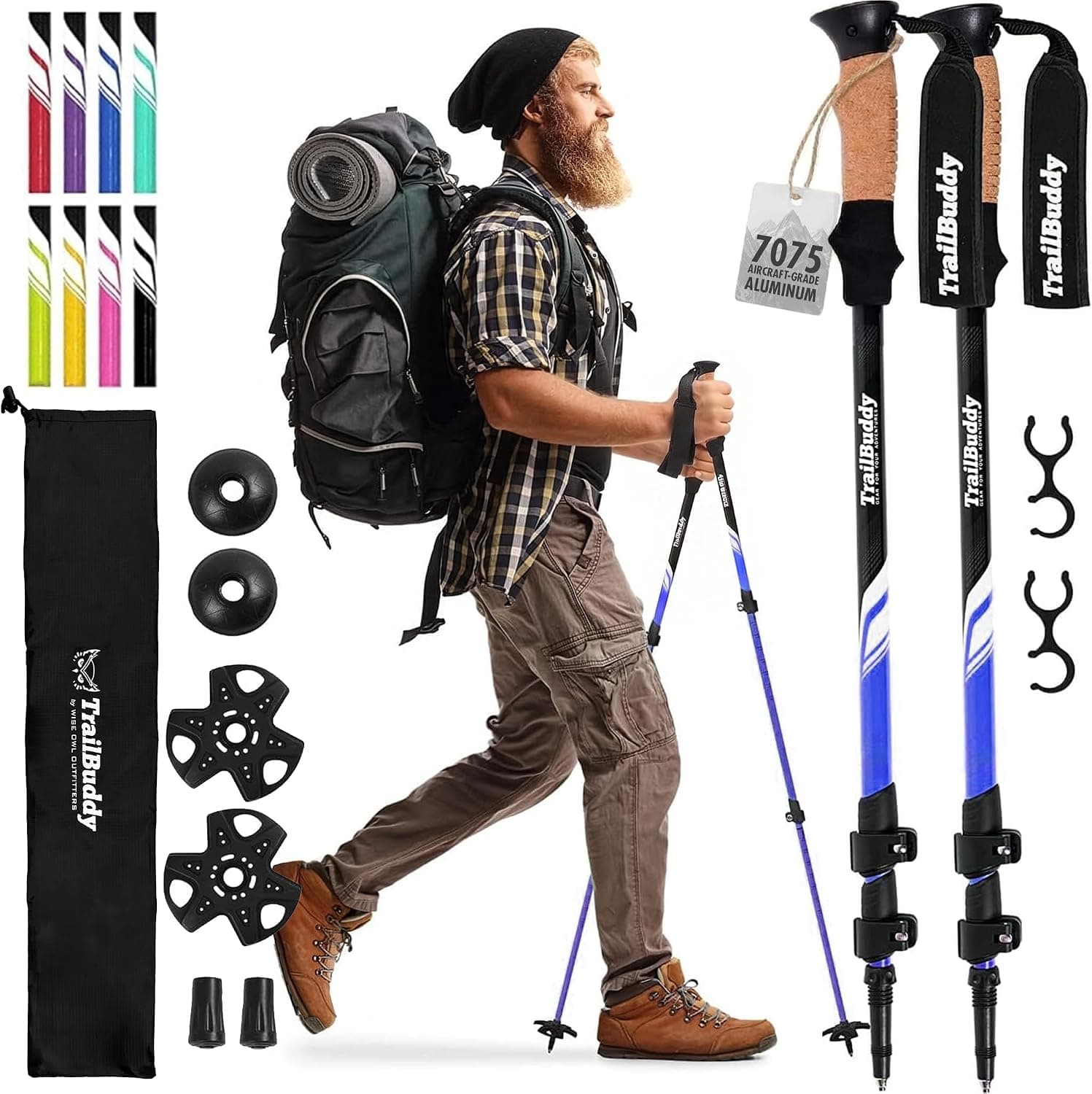 Quality trekking polesEssential
Metal flip-lock poles rated for tent pitching. Budget poles with plastic locks can collapse
- Titanium stakesEssential
Replace stock aluminium pegs. Titanium holds better and resists bending
- Groundsheet / footprintEssential
Protects the tent floor from abrasion and punctures, extending its lifespan
- 3-4m paracord
Emergency ridgeline backup if a trekking pole breaks
- Seam sealer
Useful for maintaining any tent's seams and topping up factory sealing over time
Which Trekking Pole Tent Should You Buy?
The right tent depends on your budget and priorities:
- Unlimited budget, 2-person: The Zpacks Duplex at 820g is the lightest option, or the Hyperlite Ultamid 2 if you want maximum interior space and storm-worthiness.
- Mid-range budget, 2-person: The 3F UL Gear Lanshan 2 at $188 delivers impressive performance for the price. Upgrade the pegs and you have a capable 3-season shelter.
- Tight budget, 2-person: The River Country 2.2 at $70 lets you try trekking pole camping without a significant financial commitment, though you will need to buy it direct rather than on Amazon.
- Solo hikers: The Six Moon Designs Lunar Solo at 740g offers the best weight-to-space ratio for one person.
For most hikers getting into ultralight camping, I'd recommend starting with the Lanshan 2. It's affordable enough that the investment isn't painful, light enough to make a real difference on the trail, and the double-wall design avoids the condensation issues that frustrate first-time ultralight campers. If you catch the bug and want to go lighter, the Zpacks and Hyperlite options are there waiting.
Frequently Asked Questions
Last updated on June 21, 2026.

Jasper Baetens
Hiking enthusiast from Belgium, mainly active in Europe. Created HikeHeaven to share experiences, research, tips, tricks and product recommendations, or simply to help other hikers.