Best Hiking Backpacks: Size Guide and Top Picks
A practical guide to choosing the right hiking backpack size, fit, and features. From day packs to expedition packs, with picks from Osprey and Deuter.


The wrong backpack turns a great hike into a misery. Too small and you're lashing things to the outside; too big and you're carrying dead weight and air. Get the size right, get the fit right, and the pack disappears. You just feel the trail.
This guide covers everything from 20-litre day packs to 75-litre expedition rucksacks, with specific model recommendations at each size. It also covers the one thing most guides skip: fit. Because even the best hiking backpack on the market is useless if it sits wrong on your back.
How to Choose the Best Hiking Backpack Size
Volume is measured in litres. Here's how it maps to trip length.
20-25L: Half-day to full-day hikes without overnight gear. Fits water, food, a layer, and first aid. The right size for most day hiking.
28-35L: Long day hikes or single-night trips with minimal gear. Works for fastpackers who use ultralight kit and for anyone doing a single wild camp with a small sleeping bag and bivy.
40-50L: Two to three-night backpacking trips. Comfortable volume for a tent, sleeping bag, pad, three days of food, water, and clothing without compressing everything to its limit.
55-75L+: Four nights and beyond, technical expeditions, winter camping with bulkier kit, or anyone who hasn't yet transitioned to ultralight gear. Also covers shoulder-season hiking where extra layers add significant bulk.
The common mistake is buying too large. A 65L pack on a 2-day trip means carrying a half-empty bag that shifts and slaps with every step. Buy for your typical trip, not your biggest one. You can always strap overflow on the outside for an occasional longer route.
Fit Matters More Than Brand
You can buy the most technically advanced pack on the market and have a miserable experience if it doesn't fit your body. Three measurements matter.
Torso length: The distance from the C7 vertebra (the bony bump where your neck meets your shoulders) to the iliac crest (the top of your hip bones, where your hands naturally rest on your hips). Most packs are designed for torso lengths between 16" and 21". Measure yours before buying. Packs that are too long sit the shoulder straps too far down and transfer load poorly; too short and the hip belt rides up off your hips entirely.
Hip belt fit: The hip belt should sit centred on your iliac crest, with the belt buckle roughly in line with your navel. The hip belt carries 70-80% of the load in a properly fitted pack. It's not decoration. If the hip belt slides up or doesn't wrap around your hip bones, the load drops to your shoulders and your back will pay for it.
Load lifter straps: These are the small straps that connect the top of the shoulder straps to the top of the pack frame. They should sit at roughly a 45-degree angle from your shoulder. If they're pulling straight back horizontally, the pack is too short. If they're nearly vertical, the pack is too long. Getting these right is the single quickest way to improve how a loaded pack feels.
Many outdoor retailers offer fitting sessions. If you can visit one before buying, do it. Osprey, Deuter, and Gregory all have packs in multiple back lengths for this reason.
Best Day Packs: 20-30L
Day packs in this range are the workhorses of hiking. You'll use them more than any other pack you own. The priorities here are breathability (you'll move fast), organisation, and weight.
Osprey Stratos 24
The Osprey Stratos 24 ($140) is the benchmark for ventilated day packs. The AirSpeed tensioned mesh back panel creates a gap between the pack and your back, allowing air to circulate where a traditional foam-backed pack would trap heat. For any hike where you'll be working hard, this ventilation is the difference between an uncomfortable slog and a comfortable one.
The Stratos 24 carries an integrated rain cover under a zip-away pocket at the base, a reservoir sleeve for a 2-3L hydration bladder, two hip belt pockets, trekking pole attachment points, and a top lid with its own zip compartments. It also comes with a lifetime guarantee. The 24L volume fits a full day's kit without the pack becoming a brick.
Osprey Daylite 13
If you're looking for a genuinely minimal day pack for a summit push from a high camp, a short trail run, or a travel-friendly carry-on, the Osprey Daylite 13 ($55) is worth a look. At 290g, it packs flat into its own pocket and attaches directly to larger Osprey packs via a compatible clip system.
The Daylite 13 won't replace the Stratos 24 for a full day hike: there's no hip belt transfer, no hydration reservoir support, and the organisation is basic. As a secondary pack or a commuter-to-trailhead solution, it earns its place.
Deuter Speed Lite 21
The Deuter Speed Lite 21 ($100) takes a different approach: extremely light at 560g, with a streamlined harness designed for fast movement. The Aircomfort mesh back isn't as dramatically ventilated as Osprey's AirSpeed, but it's considerably lighter. For trail running crossovers or fastpack-style day hikes, it's worth the trade-off.
Best Weekend Packs: 35-50L
This is where most recreational backpackers live. A well-fitted 40-50L pack can handle a 3-day route with room to spare if you're not carrying ultralight kit.
Osprey Talon 33 and Talon 44
The Osprey Talon range is the best starting point for most hikers in this category. The Talon 33 ($160) is the sweet spot: large enough for 2-3 nights of camping, light enough (1.07kg) that it doesn't add unnecessary burden, and fitted with a hip belt substantial enough to transfer load properly. The Talon 44 ($180) adds 11 litres for longer routes or more clothing-intensive trips.
Both use the same AirSpeed tensioned mesh system as the Stratos 24. The harness is adjustable in torso length on the Talon 44, a significant advantage if you fall between standard sizes. Includes trekking pole loops, side water bottle pockets accessible from the hip, and a magnetic chest buckle for pack removal without hunting for clasps.
Pairing a Talon with trekking poles and the right sleeping system means you can cover serious ground without the load becoming the story.
Gregory Zulu 40
The Gregory Zulu 40 ($175) offers a different take with its FreeFloat hip belt, which pivots independently of the frame to move with your hips rather than against them. On uneven terrain (scrambling, boulder fields, off-trail routes) this makes a real difference. The pack frame doesn't fight your natural movement.
The Zulu 40 also has a removable top lid that converts to a day pack, useful for base camp scenarios where you want to leave the main pack and do a shorter summit trip. Load access is via a full back panel zip rather than top-loading only, which makes finding kit at the bottom less of an excavation.
Deuter Futura Air Trek 45+10 SL
The Deuter Futura Air Trek 45+10 SL ($250) has an expandable capacity. The +10 means the collar extends to provide an additional 10 litres when you need it. At its base 45L it fits a solid 3-day kit; expanded to 55L it handles 4-5 days. This is the SL (women's fit) version, with a back length, shoulder straps, and hip belt shaped for narrower, shorter-torso frames. If you want the unisex cut, the Futura Air Trek 50+10 is the closest equivalent. The Aircomfort back keeps the pack ventilated, and the harness adjusts across a useful range of torso lengths.
Best Expedition Packs: 55-75L
For week-long routes, winter camping, or expeditions carrying substantial kit, volume becomes a genuine necessity. These packs need stiff frames, substantial hip belts, and enough structure to carry loads of 15-20kg without turning your spine into a question mark.
Osprey Atmos AG 65
The Osprey Atmos AG 65 ($270) is the most acclaimed pack in this category and has been for several years. The Anti-Gravity (AG) suspension system uses a continuous tensioned mesh that moulds to your back and hip shape under load. At 15kg+, it distributes weight better than most alternatives at twice the price.
The Atmos 65 carries 65L, includes an integrated rain cover, a sleeping bag compartment at the base accessible via external zip, full hip belt pockets, and a removable top lid with two compartments. The hip belt is substantial and padded for heavy load transfer. Weight is 1.9kg. You pay with weight for the suspension system, but most hikers loading 15kg+ consider it worth it.
For anyone planning wild camping trips or longer routes, the Atmos AG 65 pairs naturally with reading the wild camping Europe guide and thinking through your sleeping system and shelter setup.
Deuter Aircontact Lite 65+10
The Deuter Aircontact Lite 65+10 ($250) is the lighter-framing alternative to the Atmos. At 2.1kg it's slightly heavier than the Atmos, but the carrying system uses Deuter's Aircontact Lite back with ventilated channels rather than a tensioned mesh. The result is better breathability than a closed-contact frame but less dramatic ventilation than a suspended mesh system.
The +10 expansion collar is genuinely useful for variable kit configurations. The Aircontact Lite series uses a fixed but adjustable harness with specific men's and women's versions rather than a universal fit.
Gregory Baltoro 65
The Gregory Baltoro 65 ($290) is the pack you choose when you're carrying heavy loads (18kg or more) and want maximum stability. The Response A3 suspension system uses three points of adjustment and pivots to transfer load aggressively to the hips. Under heavy weight it's the most stable option in this comparison.
The Baltoro is heavier than the alternatives (2.2kg), a trade-off worth making at serious expedition loads. At 3-5 days of moderate kit, the Atmos AG 65 or Aircontact Lite is the better balance. At 7+ days with winter gear or technical climbing kit, the Baltoro earns its weight.
If your expedition plans include a trekking pole tent, the best trekking pole tents guide is worth reading before you commit to shelter options, as it affects how you pack the tent and what poles you need.
Hiking Backpacks by Category
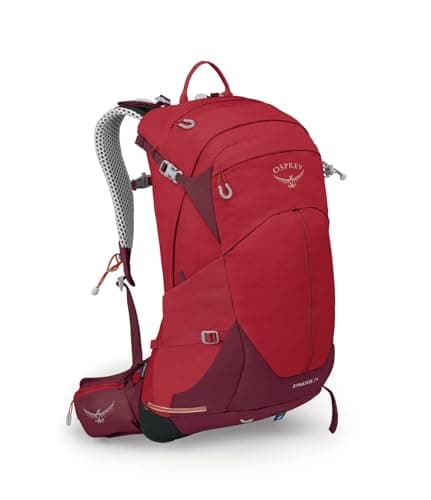
Osprey Stratos 24 (Day Pack)
$140
?Estimated price — check latest price on Amazon
Day hikers who want serious ventilation and all-day comfort
Pros
- ✓AirSpeed tensioned mesh for exceptional ventilation
- ✓Integrated rain cover included
- ✓Hydration reservoir sleeve and organisation pockets
- ✓Osprey lifetime guarantee
Cons
- ✕Ventilated back means the pack sits slightly away from your back
- ✕More expensive than non-ventilated alternatives
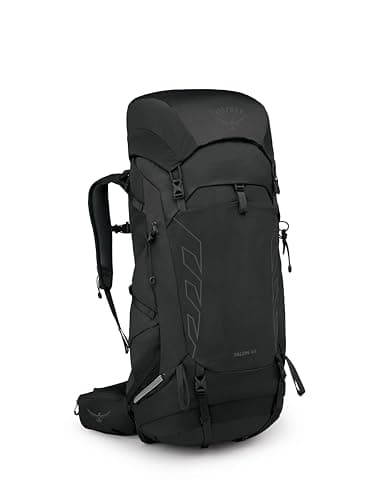
Osprey Talon 44 (Weekend Pack)
$180
?Estimated price — check latest price on Amazon
2-3 night backpackers wanting a light, ventilated pack
Pros
- ✓AirSpeed ventilation matching the Stratos series
- ✓Adjustable torso length
- ✓Magnetic chest buckle, trekking pole attachment
- ✓Light for its capacity at 1.07kg
Cons
- ✕Hip belt less padded than expedition-grade options
- ✕Less ideal for loads over 14kg
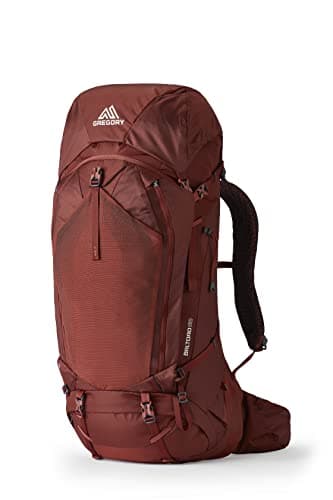
Gregory Baltoro 65 (Expedition Pack)
$290
?Estimated price — check latest price on Amazon
Expedition hikers and winter campers carrying 15kg or more
Pros
- ✓Response A3 suspension handles very heavy loads
- ✓Stable and secure at 18kg+
- ✓Full organisation with dedicated sleeping bag compartment
- ✓Multiple torso and hip adjustments
Cons
- ✕Heavy at 2.2kg unladen
- ✕Overkill for moderate loads and shorter trips
Women's Fit Considerations
Women's-specific packs are a genuine functional choice, not marketing. The anatomical differences that matter for pack fit are shorter average torso length, narrower shoulder width, and different hip proportions.
Women's packs use shorter back lengths (typically S/M rather than M/L), shoulder straps shaped for a narrower shoulder width, and hip belts that sit lower on narrower hip structures. If you're a woman trying a unisex pack and finding the shoulder straps flare outward or the hip belt sits uncomfortably high, a women's-specific option is likely to fit better.
Osprey's Aura AG series mirrors the Atmos AG for women. The Aura AG 65 uses the same Anti-Gravity suspension with a women's-specific torso and hip geometry. Deuter and Gregory both produce women's versions of their main expedition packs with equivalent adjustments.
One practical note: torso length varies significantly among women as among men. A 5'3" woman and a 5'8" woman will not fit the same pack, and a women's-specific size medium may suit a shorter-torso man. Measure your torso length and use it, rather than using gender as the only filter.
What to Look for in a Hiking Backpack
Suspension and frame: Day packs up to 25L are fine without a frame sheet, as loads are light enough that a stiffened back panel works. For 35L and above, look for a frame (either aluminium stays or a rigid sheet) that transfers load to the hip belt. Without a frame, all the weight hangs from your shoulders.
Hip belt: Above 30L, a padded hip belt is not optional. It transfers 70-80% of the load from your shoulders to your hips. A thin decorative hip strap on a 45L pack is a design flaw, not a feature. Test by loading the pack and checking whether your hips or your shoulders carry the weight.
Hydration compatibility: All the packs above support hydration reservoirs (bladders). Look for a sleeve inside the main compartment and a routing hole for the drinking tube at the shoulder. If you prefer bottles, check for deep side pockets accessible while wearing the pack.
Rain cover: Most Osprey packs above 20L include an integrated rain cover. Deuter and Gregory require a separate purchase. A built-in cover is more convenient; a separate cover lets you pick a heavier-duty option. For seriously wet conditions, a pack cover alone isn't sufficient. Use dry bags for electronics and sleeping kit inside the main compartment.
Pockets: The hip belt pockets on higher-end packs are useful for snacks and a phone accessible on the go. A top lid with its own compartments keeps small kit (headtorch, first aid, maps) accessible without opening the main pack. An external stretch pocket at the front or side holds a waterproof layer you've removed during a warm climb.
If you're travelling to your trailhead by air, check the hiking backpack as carry-on guide before booking. Many 40-50L packs fall within airline carry-on limits if packed correctly, and the guide covers exactly which packs and strategies work.
Backpack Buying Checklist
- Measure your torso lengthEssential
C7 vertebra to iliac crest in inches. Use this to filter packs before trying them. Fitting sessions at outdoor retailers are free and worth the trip.
- Test the hip belt fitEssential
With a loaded pack, the hip belt should sit centred on your iliac crest. The load should transfer to your hips, not your shoulders.
- Choose the right volumeEssential
Match to your typical trip length. Day hike: 20-25L. Weekend: 35-50L. Week+: 55-75L. Buying too large is the most common mistake.
- Check ventilation system
Tensioned mesh (Osprey AirSpeed, Anti-Gravity) keeps the pack off your back. Better for warm conditions and active hiking. Traditional contact back transfers load slightly better for very heavy loads.
- Rain cover
Integrated is more convenient. For seriously wet conditions, supplement with internal dry bags regardless of whether the pack has a cover.
- Hip belt pockets
Useful on any hike longer than 4 hours. Keeps snacks and a phone accessible without stopping to open the main pack.
The best hiking backpack is the one that fits properly and matches your trip length. For most people that means a ventilated 40-50L pack from Osprey or Deuter with a proper hip belt and adjustable torso length. Get the fit right before worrying about features.
If you're building out your kit alongside the pack, think about what goes inside it: the best dry bags for hiking covers keeping electronics and sleeping kit dry, and the one or two trekking poles guide covers whether you need poles and which ones attach cleanly to most packs in this guide.
Last updated on June 21, 2026.

Jasper Baetens
Hiking enthusiast from Belgium, mainly active in Europe. Created HikeHeaven to share experiences, research, tips, tricks and product recommendations, or simply to help other hikers.