Camping Without a Tent: Tarps, Bivvies and Hammocks
Go tentless on the trail: a practical guide to tarp shelters, bivy sacks, and hammock camping with real gear recommendations and honest trade-offs.

A tent isn't the only way to sleep outdoors. Camping without a tent has its own following, and plenty of backpackers have ditched the poles and flysheet in favour of lighter, simpler shelters that get you closer to the landscape around you. Going tentless isn't for everyone, but understanding the options will help you decide if any of them fit your style of hiking.
Why Go Without a Tent?
The main argument is weight. A standard three-season tent weighs 1.2 to 2 kg. A tarp covering the same person weighs 300 to 500 g. A bivy sack that fits over your sleeping bag weighs 200 to 600 g depending on the material. These savings add up over the course of a multi-day trip, particularly if you're already carrying heavy food and water.
There's also a practical simplicity to tentless camping. A tarp takes 90 seconds to pitch once you know what you're doing. There's no inner tent to remove in wet weather, no vestibule to organise, and no condensation-soaked fabric to pack away in the morning. Many lightweight hikers find this freedom changes how they relate to the landscape.
The trade-offs are real. Tents provide bug protection, privacy, and a contained living space. Tentless systems require more skill to use effectively and leave you more exposed to weather changes overnight. Understanding the conditions you'll face is essential before leaving the tent at home.
Tarp Shelters
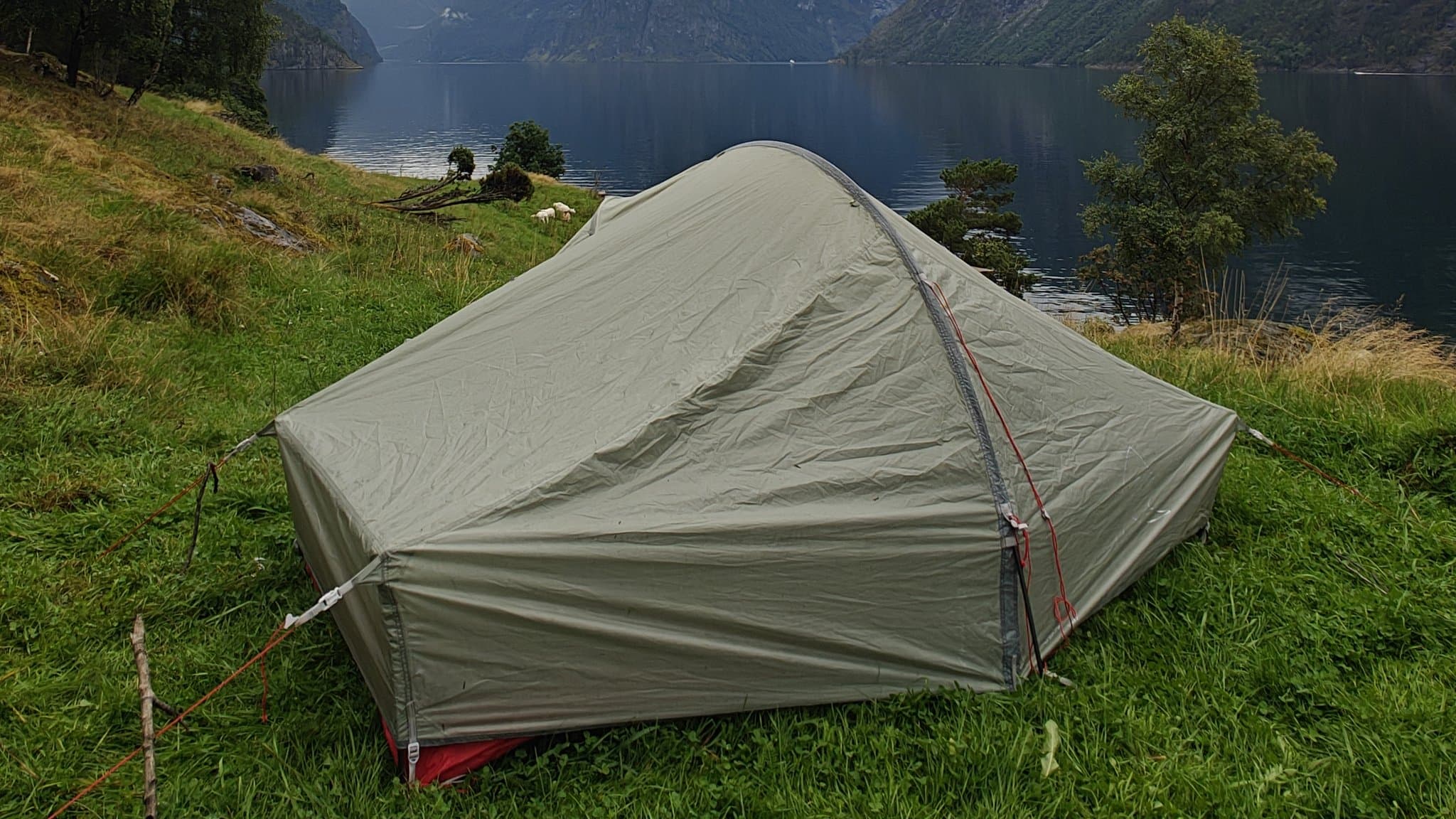
A tarp is a rectangle or shaped sheet of lightweight fabric, usually silnylon, Dyneema, or polyester, that you configure using trekking poles, trees, or dedicated stakes. The configurations range from a simple A-frame (quick, good rain protection) to a lean-to (more open, better views) to a low-pitched storm setup (maximum weather resistance).
The learning curve is steeper than pitching a tent. Your first few tarp setups will take longer and look messier than the finished product you see in photos. By the fourth or fifth time, it becomes second nature.
What to look for in a tarp:
- Size: A solo tarp should be at least 2.7 x 2.7 m to cover you and your gear in most pitches. Anything smaller limits your configuration options in bad weather.
- Material: Silnylon is the standard choice, balancing weight, cost, and durability. Dyneema (DCF) is lighter but significantly more expensive.
- Guy line attachment points: More attachment points mean more pitching options. Look for at least six on a solo tarp.
- Weight: A quality solo silnylon tarp weighs 350 to 500 g. Sub-200 g Dyneema tarps exist but cost several hundred pounds.
The DD SuperLight Tarp at 345 g (3 x 2.9 m) is a solid entry point. It comes pre-rigged with attachment points in useful positions and works well with trekking poles as uprights. The silnylon is water-resistant rather than waterproof, so seam-sealing before your first trip is worthwhile.
Bivy Sacks
A bivy sack (short for bivouac sack) fits over your sleeping bag to create a waterproof outer layer. It's the simplest tentless option: lay it out, climb in, and you have a weatherproof sleeping setup with minimal faff.
Bivies fall into two categories:
Emergency bivies (foil or thin nylon) are small, light and cheap, designed for unexpected overnight situations rather than planned camping. They condense heavily and aren't comfortable for multiple nights. Carry one as a backup but don't plan a trip around them.
Dedicated bivies are designed for regular use. They use breathable waterproof fabrics like Gore-Tex or eVent to reduce condensation while keeping rain and wind out. A good dedicated bivy transforms a sleeping bag into an essentially weatherproof shelter at a fraction of a tent's weight.
The Alpkit Hunka uses a breathable Pertex Shield fabric and weighs around 510 g. For the price, it's an excellent starting point for bivy camping in UK conditions. The zip opening runs along the top, which keeps rain from pooling at the entrance.
For a more premium option, the Sea to Summit Ultralight Bivy weighs just 230 g and uses a 30D silicone-treated nylon outer with a breathable top panel. It's genuinely ultralight and packs down to almost nothing. The limitation is that it's more vulnerable to condensation in humid UK conditions than heavier three-layer fabric bivies.
Bivy pros:
- Very light (230 to 600 g)
- No pitch required
- Works anywhere you can lie flat
- Adds warmth to your sleeping bag rating
Bivy cons:
- Claustrophobic for some people
- Condensation management is harder than a tent
- No storage space for gear
- Can't sit up or change clothes inside
For most UK wild camping, combining a bivy with a lightweight tarp overhead is the most practical tentless system. The bivy handles the sleeping bag; the tarp creates a covered space above you.
Hammock Camping
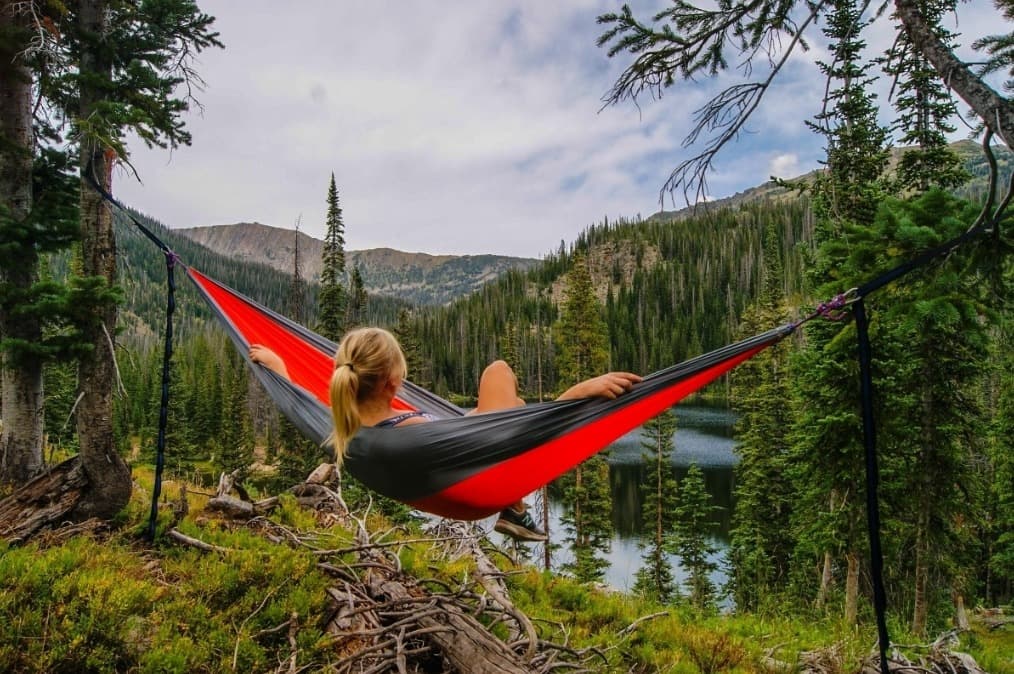
Hammock camping replaces the sleeping system and ground entirely. You sleep suspended between two trees, wrapped in an underquilt for insulation below and a top quilt above, with a rain fly overhead.
Done properly, hammock sleeping is extraordinarily comfortable. You can't roll off the edge, there are no roots pressing into your back, and the gentle movement helps many people sleep. The setup is fast once you know your preferred hanging angle.
The ENO DoubleNest Hammock weighs 550 g and comfortably fits one person sleeping diagonally. Sleeping diagonally in a gathered-end hammock like this flattens the sleeping surface considerably, which solves the banana-curve problem that ruins hammock sleep for beginners.
What you need beyond the hammock itself:
- Tree straps: Wide webbing straps (at least 2.5 cm) protect bark and are mandatory in most wild camping areas. 1-metre straps with integrated knot systems make setup simple.
- Underquilt: This is the critical item. A sleeping bag inside a hammock compresses its insulation on the underside, leaving you cold from below. An underquilt wraps beneath the hammock and insulates without compression.
- Rain fly: A purpose-shaped tarp or rain fly pitched above the hammock. Most hammock systems include one or sell it separately.
- Bug net: Essential if camping anywhere with midges or mosquitoes. Many hammocks include an integrated net; some require a separate one.
The total weight of a complete hammock system (hammock, straps, underquilt, top quilt, fly) is typically 1 to 1.5 kg, which is similar to or slightly lighter than a mid-range tent plus sleeping pad. The real weight saving comes when comparing it to a heavier tent setup.
Hammock camping only works where there are trees. Above the treeline, on beaches, in open moorland, and in most desert environments, hammocks are not an option. Check conditions before committing to this as your primary shelter system.
Natural Shelters
Natural shelters (rock overhangs, dense tree canopy, snow holes in winter) are worth knowing about as emergency options, but they shouldn't be your planned shelter on a booked trip. Rock overhangs are rarely level, often damp, and occupied by wildlife. Dense tree canopy keeps rain off until it saturates, then dumps water in large drops.
If you know how to build a debris shelter or snow hole, these skills are valuable for emergency situations. They're not a replacement for a tarp or bivy in planned wild camping.
Weight Savings vs a Tent
As a practical comparison, here's what a basic tentless system weighs compared to a mid-weight tent:
| System | Weight |
|---|---|
| Standard 3-season tent (1-person) | 1,200 to 1,800 g |
| DD SuperLight Tarp + Alpkit Hunka bivy | 855 g |
| Tarp alone | 345 g |
| ENO DoubleNest system (hammock + straps + fly) | 950 to 1,300 g |
| Sea to Summit Ultralight Bivy alone | 230 g |
The saving of 400 to 900 g over a standard tent is significant over a multi-day trip. Combined with other ultralight gear choices, going tentless can shift a 15 kg pack into the 10 to 12 kg range.
When Going Tentless Makes Sense
Tentless camping works well when:
- You're in an area with predictable, mild weather and you've checked the forecast
- You're experienced enough to read conditions and make fast decisions overnight
- You're on a route where weight matters significantly, such as a long-distance trail
- You've practised your setup and know it works in wet conditions
It's less suitable when:
- Weather is unpredictable or storms are possible overnight
- You're camping in areas with high insect pressure (midges, mosquitoes)
- You need privacy, such as in busy camping areas
- It's your first time camping and you're still learning the basics
For the full picture on wild camping rules across Europe, our guide to wild camping in Europe covers what's legal where and how to do it responsibly. If you're heading north, the wild camping in Scotland guide explains your rights under the access laws in more detail.
Recommended Tentless Shelter Systems
Tentless Shelter Setups
- DD SuperLight Tarp
Versatile silnylon tarp, 3 x 2.9 m, works with trekking poles or trees, multiple configuration options
- Alpkit Hunka Bivy
Breathable Pertex Shield bivy sack, UK conditions, first-time bivy campers
- Sea to Summit Ultralight Bivy
Ultralight 230 g bivy, best for weight-focused backpacking in mild conditions
- ENO DoubleNest Hammock
550 g gathered-end hammock, woodland camping, needs wide tree straps and underquilt
For shelter that uses your trekking poles as structure, take a look at our guide to the best trekking pole tents, which covers a middle ground between a full tent and a bare tarp.
Frequently Asked Questions
Going tentless is a skill worth developing gradually. Start with a single calm-weather overnight using a tarp over a camping meadow, see how you find the experience, and build from there. The weight savings are real and the experience of sleeping under an open shelter in good weather is something that's hard to describe until you've tried it.
Last updated on June 21, 2026.

Jasper Baetens
Hiking enthusiast from Belgium, mainly active in Europe. Created HikeHeaven to share experiences, research, tips, tricks and recommend products — or simply to help other hikers.