Best Leather Hiking Boots: Full-Grain and Nubuck Compared
The best leather hiking boots for serious backpacking and alpine terrain. Full-grain and nubuck models compared on durability, support, and value.

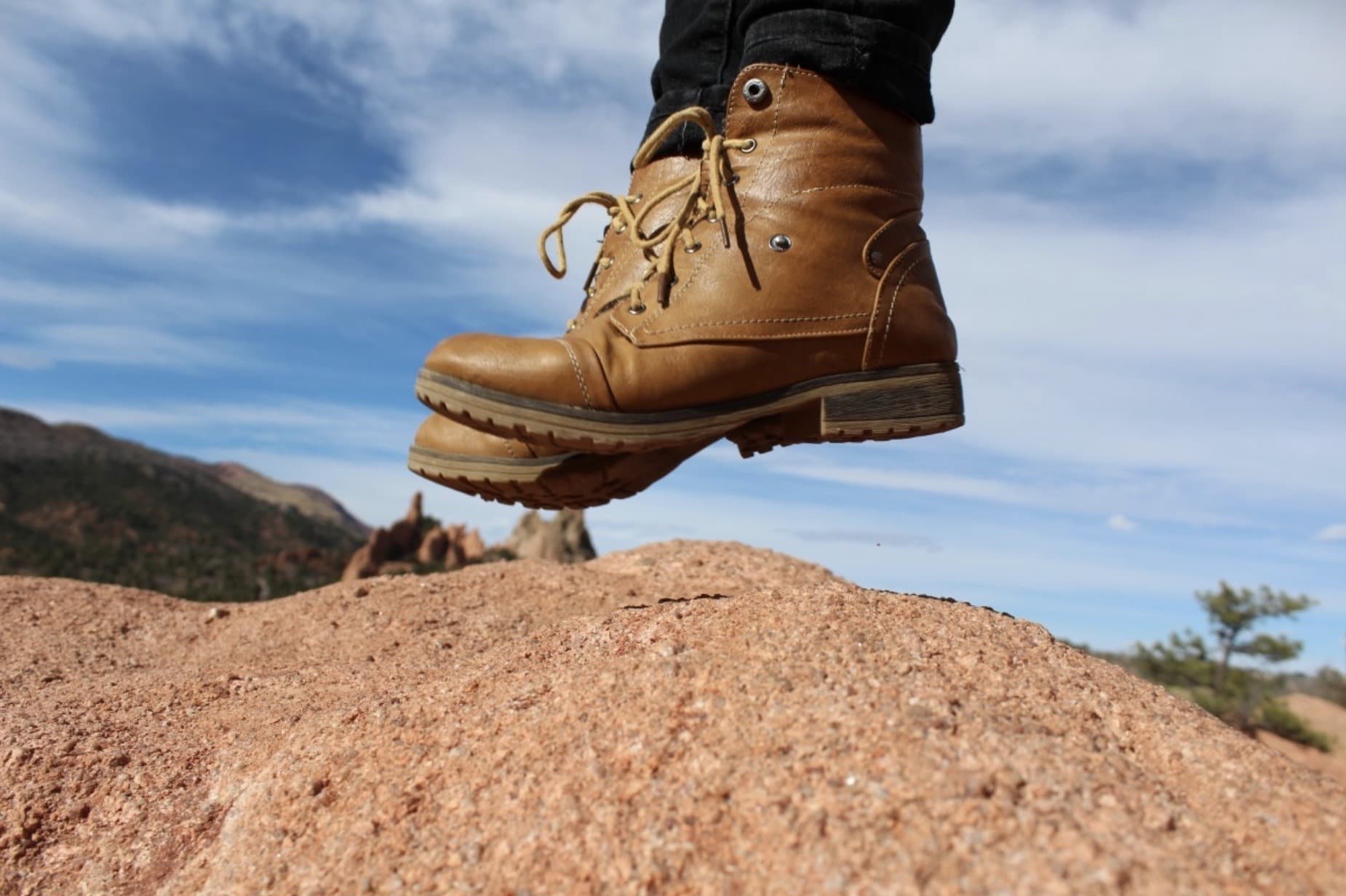
The best leather hiking boots have a survival advantage that synthetic materials can't match: they can be maintained, resoled, and repaired. A quality pair of full-grain leather boots, cared for properly, will outlast three or four pairs of synthetic alternatives. For serious backpacking and alpine use, this longevity argument is compelling.
But leather isn't automatically better for every hiker. Understanding the trade-offs between leather and synthetic, and between full-grain and nubuck, helps you spend your money correctly.
Full-Grain Leather vs Nubuck: What's the Difference?
Full-grain leather is the outermost layer of the hide, the densest and most durable part of the leather. The grain pattern is intact and visible. Full-grain leather is stiffer, heavier, and more water-resistant than nubuck because the grain surface acts as a natural barrier to water. It's the traditional choice for serious mountaineering and technical backpacking.
Nubuck leather is full-grain leather that has been sanded or buffed on the grain side to create a soft, suede-like surface. It's lighter, more flexible, and breaks in faster than full-grain, but the sanded surface is more porous and requires more frequent conditioning and DWR treatment to maintain water resistance.
Split-grain leather is the lower layers of the hide, not the outer grain. It's softer and cheaper but significantly less durable and water-resistant than either full-grain or nubuck. Split-grain is used in budget hybrid constructions; it's not a serious mountain boot material.
What Makes a Quality Leather Boot
Welt Construction
The most important quality indicator in a leather boot is the sole attachment method. Goodyear welt construction attaches the sole through a strip of leather (the welt) that can be separated and replaced when the sole wears. This allows resoling. Cemented (glued) soles cannot be resoled economically; when the sole wears out, the boot is scrap.
Check for welt construction before buying any leather boot you expect to last multiple seasons. Brands that use Goodyear welt or stitched sole attachment: Zamberlan, Hanwag, Lowa, Asolo. Most budget leather boots use cemented construction despite the leather upper.
Full Upper Construction
The upper should be constructed from a single piece of leather (or minimal pieces) to reduce seam failure points. More seam lines mean more potential leak sites after the waterproof membrane degrades. The best leather boots have one or two-piece uppers with minimal external stitching lines.
Rand
A rubber rand (the strip of rubber bonded around the base of the upper) protects the leather at the toe and heel from abrasion on rock. This is particularly important for climbing approach shoes and technical mountaineering boots. Not all hiking boots have a full rand; look for at least a toe rand on any technical leather boot.
Best Leather Hiking Boots
Zamberlan 1996 Vioz Lux GTX RR: Best Premium Full-Grain Boot
Zamberlan is an Italian boot maker with a century-long history, and the 1996 Vioz Lux is their benchmark hiking boot. Full-grain Perwanger leather upper with GORE-TEX lining, Vibram Supramontagna outsole, and Zamberlan's Hydrobloc waterproof treatment on the leather itself.
The Italian craftsmanship is evident in the fit: most hikers find the Zamberlan last shape accommodates a broad range of foot types with minimal pressure points. The Vibram outsole is grippy on wet rock and has enough lug depth for loose scree.
At around $400, this is a serious investment. Cared for properly (regular conditioning, reproofing, eventual resoling), the Vioz should last 10-15 years of regular backpacking use.
Lowa Renegade GTX Mid: Best Mid-Range Leather Boot
Lowa is the most commonly recommended mid-range leather boot brand in Europe, and the Renegade GTX Mid is their bestseller. It uses a combination of nubuck leather and synthetic overlays, which reduces weight compared to full full-grain construction while maintaining durability.
The Gore-Tex lining is reliably waterproof. The Lowa Monowrap frame in the midsole provides torsional rigidity without a full rigid shank, balancing protection with flexibility. At around $230, the Renegade represents good value in the leather boot category.
Break-in takes 2-3 weeks of progressive wear. The fit is medium to wide in the midfoot, medium in the heel.
Hanwag Banks GTX: Best Traditional Full-Grain Alternative
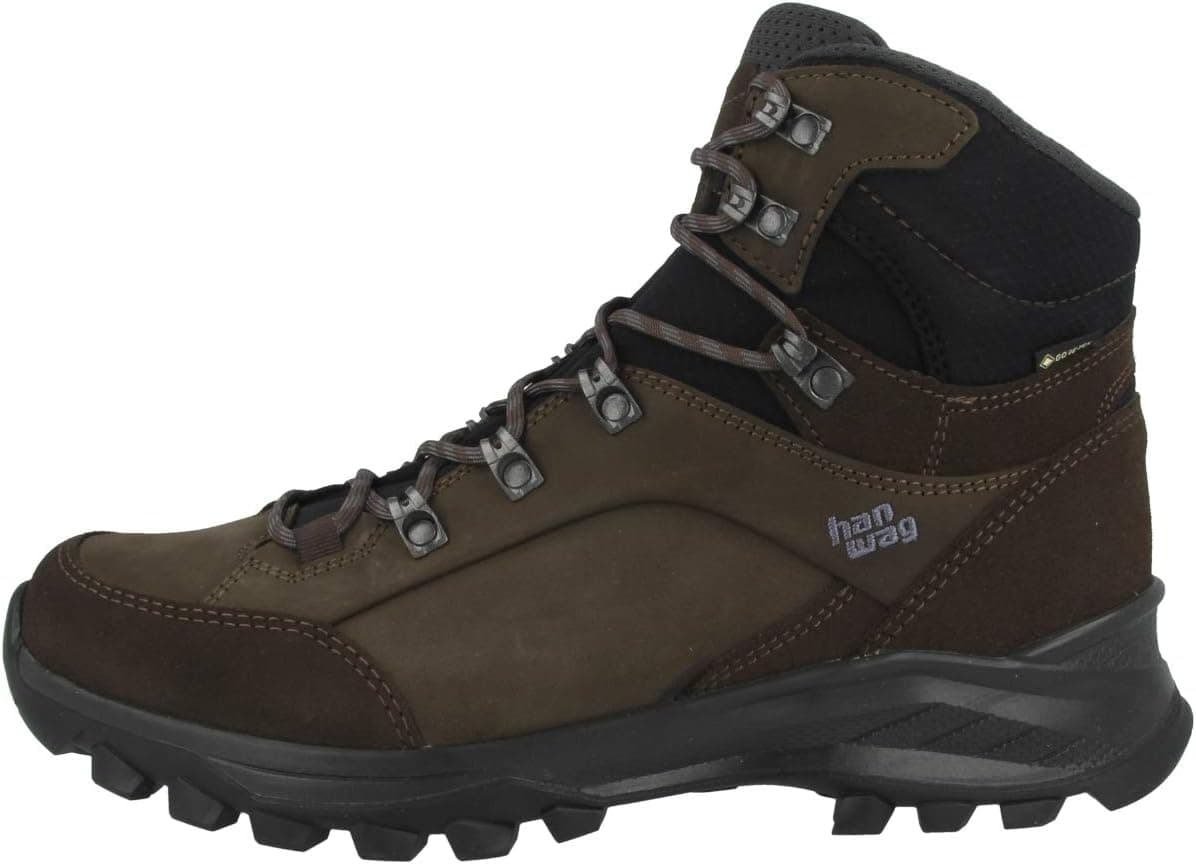
Hanwag is a German boot maker with a similarly long heritage as Zamberlan. The Banks GTX uses full-grain leather with Gore-Tex lining and is constructed with Hanwag's resolable construction. The last shape runs slightly narrower than Zamberlan, making it a better fit for narrower feet.
At around $350, the Banks GTX is between the Lowa Renegade and the Zamberlan in price, and in many ways between them in performance: more technical than the Lowa, more accessible than the Zamberlan.
Best Leather Hiking Boots Compared
Zamberlan 1996 Vioz Lux GTX
$400
?Estimated price — check latest price on Amazon
Long-term investment boot for serious backpacking
Pros
- ✓Full-grain Italian leather with welt construction
- ✓Resolable when outsole wears
- ✓Excellent last shape for most feet
- ✓Vibram Supramontagna outsole
Cons
- ✕Expensive at $400
- ✕Heavy at approximately 750g per boot
- ✕Long break-in period
Lowa Renegade GTX Mid
$230
?Estimated price — check latest price on Amazon
Best value leather-style boot for general backpacking
Pros
- ✓Best mid-range price-to-performance ratio
- ✓Nubuck/synthetic construction is lighter than full-grain
- ✓Gore-Tex waterproofing
- ✓Monowrap frame provides good torsional rigidity
Cons
- ✕Not resolable on standard models
- ✕Nubuck less durable than full-grain
Hanwag Banks GTX
$350
?Estimated price — check latest price on Amazon
Full-grain durability for narrow to medium feet
Pros
- ✓Full-grain leather with resolable construction
- ✓Traditional German craftsmanship
- ✓Gore-Tex lining
- ✓Better fit for narrower feet than Zamberlan
Cons
- ✕Heavy
- ✕Narrower last may not suit all foot shapes
Care and Maintenance
Leather boots require regular maintenance to maintain waterproofing and structural integrity. Neglecting this accelerates deterioration significantly.
Cleaning: Remove surface mud with a brush and warm water. For ingrained dirt, use a leather-specific cleaner. Don't use household detergents.
Conditioning: Apply leather conditioner (Nikwax Leather Conditioner, Granger's G-Wax, or Sno-Seal) after cleaning while the leather is still slightly damp. This maintains the suppleness of the leather and prevents cracking. Apply thin coats: too much conditioner makes the leather soft and reduces waterproofing.
Waterproofing: The DWR on the outer leather surface degrades over time. Reapply a water repellent treatment (Nikwax Leather Proof, Granger's Repel Wax) after each thorough cleaning. For full-grain leather, a wax-based treatment (Sno-Seal) provides the most durable base waterproofing.
Drying: Never dry leather boots near direct heat (radiators, camp stoves). This dries and cracks the leather rapidly. Stuff with newspaper after a wet day and let dry at room temperature.
For the complete guide to breaking in new leather boots progressively without blisters, our how to break in hiking boots guide covers the step-by-step process for full-grain and nubuck boots specifically.
Leather hiking boots are a long-term investment rather than a transactional gear purchase. Choose the Lowa Renegade for the best mid-range balance of leather durability and modern performance, or the Zamberlan Vioz if you want a boots-for-life investment for serious backpacking. Break them in properly, maintain them regularly, and they'll serve you better than any synthetic alternative over a 10-year timeframe.
Last updated on June 21, 2026.

Jasper Baetens
Hiking enthusiast from Belgium, mainly active in Europe. Created HikeHeaven to share experiences, research, tips, tricks and product recommendations, or simply to help other hikers.