Best Cheap Hiking Sandals Under $70
The best affordable hiking sandals for summer trails and water crossings. Teva, Chaco, and Keen options compared on grip, durability, and comfort.

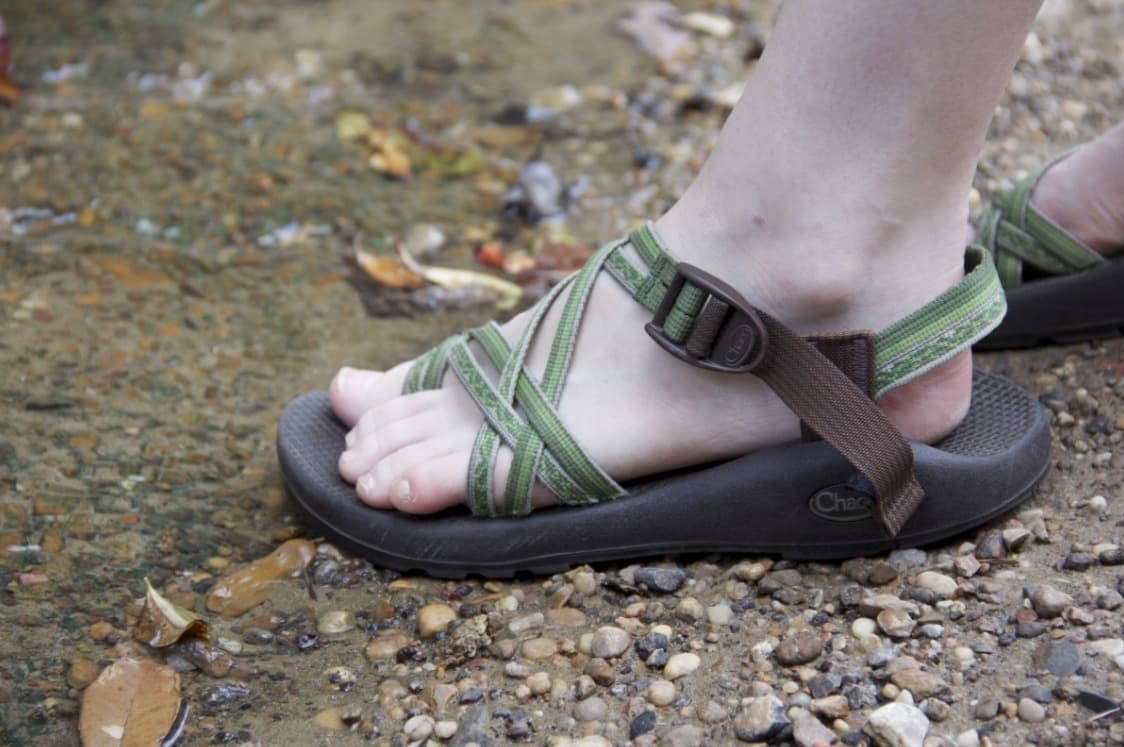
The best cheap hiking sandals fill a specific niche: summer trail hiking, camping around a site, water crossings, and beach walks where a closed shoe is too hot or too heavy for the conditions. The premium brands (Chaco, Teva, Keen) charge $80-120. There are solid alternatives at half that price.
Here's what to look for in a budget hiking sandal and which models actually deliver on trail.
When Hiking Sandals Make Sense
Sandals aren't the right footwear for every trail situation. They work well for:
Summer day hikes on good-quality trail: Packed earth, gravel, and maintained paths where your feet don't need protection from rocks or thorny vegetation.
Water crossings and coastal hiking: Sandals dry quickly and grip wet rock better than waterlogged leather boots. For routes with regular river crossings, a sandal-boot combination (sandal for crossings, boots for the main trail) reduces total time with wet feet.
Camp use and recovery: After a long day in boots, open footwear provides relief. A lightweight camp sandal that doubles as a light trail shoe reduces the gear you need to carry.
Hot, low-risk terrain: High summer temperatures make closed-toe boots uncomfortable for anything other than technical terrain. Sandals provide ventilation that makes the difference between enjoying a walk and enduring it.
What Makes a Good Budget Hiking Sandal
Outsole Grip
The outsole is everything on rocky or wet terrain. Look for a rubber compound (not EVA foam) with defined lugs. Vibram, Contagrip, and proprietary rubber compounds from Teva grip wet rock; smooth EVA outsoles do not. Run your thumb across the outsole material: if it feels hard and plastic-like, the grip in wet conditions will be poor.
Adjustable Strap System
Hiking sandals need to stay on your foot without slipping, particularly on descents where your foot slides forward. Look for a strap configuration that secures the heel, midfoot, and toe area independently. Thong-style sandals (flip-flops) have no place on trail.
Footbed Support
A flat foam footbed is fine for short walks. For hiking distances over 5-8km, arch support in the footbed reduces foot fatigue significantly. Some budget options have removable insoles that can be replaced with a supportive aftermarket option.
Quick-Dry Materials
Webbing straps dry quickly; leather straps don't. For any use near water, nylon webbing straps are more practical. The footbed should also drain quickly, not hold pooled water.
Best Cheap Hiking Sandals
Top Budget Hiking Sandals Compared
Teva Original Universal
$45
?Estimated price — check latest price on Amazon
Versatile summer sandal for light to moderate trail use
Pros
- ✓Proven design with four-point adjustable strap
- ✓Heel strap provides reliable lockdown
- ✓Non-marking rubber outsole with grip
- ✓Available under $50 widely
Cons
- ✕Limited arch support from flat footbed
- ✕Not designed for serious technical terrain
Keen Newport H2
$65
?Estimated price — check latest price on Amazon
Hikers wanting toe protection on summer trail
Pros
- ✓Closed-toe protection for rocky terrain
- ✓Washable polyester webbing
- ✓Good arch support for a budget sandal
- ✓Non-marking Keen.All-Terrain rubber outsole
Cons
- ✕Heavier than open-toe alternatives
- ✕Warm in very high temperatures due to toe coverage
Merrell Kahuna III
$60
?Estimated price — check latest price on Amazon
Arch support priority and excellent wet grip
Pros
- ✓Merrell compression-moulded insole provides real arch support
- ✓Vibram outsole is the gold standard for wet grip
- ✓Adjustable toe post and ankle strap
- ✓Good durability for the price
Cons
- ✕Toe post design not liked by everyone
- ✕May not be available in all sizes
Teva Original Universal: Best Entry-Level Hiking Sandal
The Teva Original is the baseline against which hiking sandals are measured. The four-strap adjustable system (heel, ankle, instep, toe) provides a secure fit that keeps the sandal in place on descents. The rubber outsole handles packed dirt and gravel well.
The flat footbed is the main limitation: for hikes over 8-10km or for anyone with arch issues, the lack of support becomes noticeable. An aftermarket insole (Superfeet Blue, which fits most sandals) can be added if needed.
At under $50, the Teva Original delivers reliable performance for summer hiking, beach walks, and camp use. The strap system is bombproof: Teva sandals regularly outlast the boots people buy in the same season.
Keen Newport H2: Best Closed-Toe Budget Sandal
The Newport H2 adds toe protection that open sandals lack, making it usable on rockier terrain where open toes create a genuine stubbing hazard. The closed toe also provides some insulation in cool mornings.
Keen's All-Terrain rubber outsole is competent on wet rock, and the washable polyester webbing handles dunking in streams without degrading. The arch support is better than the Teva Original, which matters for longer distances.
At $65, it's at the top of the budget range but provides a meaningfully more capable hiking tool than open-toe alternatives.
Merrell Kahuna III: Best Grip and Support
Merrell's Vibram outsole is the grip benchmark in this category. On wet streambed rocks, the Kahuna III outperforms the Teva and Keen alternatives. The compression-moulded air cushion insole provides real underfoot support that reduces fatigue on longer trails.
The toe post (thong-style attachment at the toe) isn't for everyone, but provides a different type of foot security that some hikers prefer. The adjustable ankle strap covers the heel. At around $60, the Vibram outsole alone justifies the price over cheaper alternatives.
Pairing Sandals with Socks
This is a personal choice. Thin liner socks (toe socks, merino liner socks) extend the range of sandal use into slightly cooler temperatures and prevent blister formation from webbing straps on longer hikes. Many experienced hikers wear a light sandal-compatible sock for any hike over 5km, removing them for water crossings.
For standard summer hiking socks pairing advice including materials and cushioning, our best hiking socks guide covers the full range.
Budget vs Premium: Where the Money Goes
Premium hiking sandals from Chaco and Teva's higher ranges cost $80-110. The key differences:
Better outsole compounds: Chaco's ChacoGrip rubber and Teva's Spider Rubber compound outperform basic rubber on very slick or technical surfaces.
Lifetime resoling: Chaco Z-series sandals can be resoled when the outsole wears out, extending the useful life to 10+ years. This makes the higher upfront cost less significant over time.
More precise adjustability: Premium sandals have more strap adjustment points, allowing a more precise fit for different foot widths and arch shapes.
For summer day hiking, the budget options are functionally adequate. For regular use over years and technical terrain, the investment in Chaco Z-series or Teva Hurricane XLT pays back over time.
Budget hiking sandals deliver good value for summer trail use. The Teva Original is the safe default; step up to the Keen Newport H2 if you want closed-toe protection for rockier terrain. Any of these options outperforms cheap fashion sandals on trail by a significant margin.
Last updated on June 21, 2026.

Jasper Baetens
Hiking enthusiast from Belgium, mainly active in Europe. Created HikeHeaven to share experiences, research, tips, tricks and recommend products — or simply to help other hikers.