Hiking in a Thunderstorm: Lightning Safety Guide
Caught in a thunderstorm on the trail? Learn the 30-30 rule, lightning crouch position, and exactly when to turn back before the storm hits.

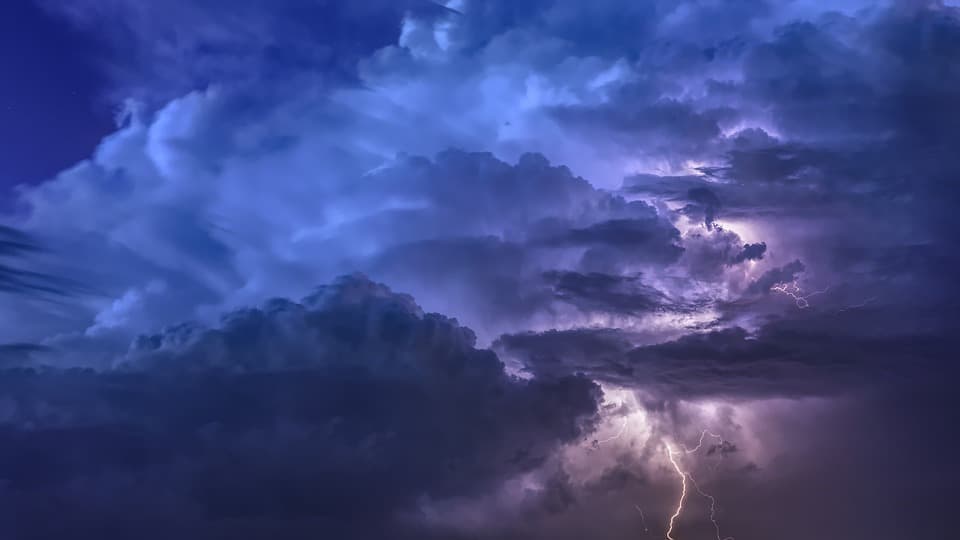
Hiking in a thunderstorm is one of the few genuinely dangerous situations you can face on the trail, and storms can develop faster than you'd expect. A clear morning sky can turn into a full electrical storm by early afternoon, particularly in mountain terrain during summer. The good news is that lightning risk is manageable if you know what signs to watch for, when to commit to turning back, and what to do if you're already caught out.
This guide gives you a practical framework for all three.
Understanding the Risks of Hiking in a Thunderstorm
Lightning looks for the path of least resistance to ground. On open terrain, that path often runs through the tallest object in the area, which on a mountain ridge can easily be you. The risk isn't theoretical. In the United States alone, lightning kills around 20 people per year and injures several hundred more, with hikers and campers consistently among the most affected groups.
Ridgelines, exposed summits, open meadows, and lake shores are all high-risk zones. Forests offer some shelter from direct strikes, but tall isolated trees are themselves high-risk. The most dangerous positions are those that make you the tallest object or place you near something that is.
The 30-30 Rule: Your Turn-Back Trigger
The 30-30 rule gives you a simple, reliable way to gauge how close a storm is and when to act.
First 30: Count the seconds between a lightning flash and the thunder that follows. Every 5 seconds equals roughly 1.6 kilometres of distance. If the gap is 30 seconds or less, the storm is within 10 kilometres. That's close enough to take seriously.
Second 30: After the last lightning flash or thunder rumble, wait 30 minutes before resuming normal outdoor activity. This is the most commonly skipped step. Storms slow down or stall, and lightning can strike well ahead of visible rain. Many strikes happen before the rain even reaches you.
If you hear thunder at all, that storm is within striking range. The phrase to remember: if you can hear it, you can be hit by it.
Start monitoring conditions long before the 30-30 rule kicks in. Check forecasts the night before and again on the morning of your hike. If you're planning to summit, aim to be off exposed terrain by midday in summer months. Most afternoon thunderstorms in mountain regions build predictably between 12 and 3pm.
Recognising a Building Storm
You don't need to wait for thunder to know a storm is developing. Watch for these warning signs while you're still on the trail.
Visual cues:
- Flat-bottomed cumulus clouds with towering vertical tops (anvil shapes)
- Clouds darkening rapidly from white to grey to charcoal
- Multiple cloud layers moving in different directions
- A sudden drop in temperature combined with increasing wind
Physical cues:
- Your hair standing on end or tingling skin (this is a serious immediate warning)
- A metallic smell in the air (ozone produced by lightning)
- Static from your gear or poles
If you feel your hair stand on end or skin tingle, lightning is about to strike nearby. This is not a drill. Drop your pack, get off elevated ground immediately, and assume the lightning crouch position described below.
What to Do If You're Caught Out
Despite your best planning, storms sometimes arrive faster than expected. If you're caught in open terrain with lightning activity nearby, here's your priority order.
1. Get off high ground immediately. Leave ridges, summits, and elevated shoulders. Move into lower terrain. Descend into a valley or forest if accessible within a few minutes. Don't stay put hoping the storm passes quickly.
2. Avoid these specific locations:
- Lone trees, cliff faces, and cave entrances (ground current travels along rock and into cave openings)
- Any water source: lakes, rivers, streams, wet gullies
- Open meadows and flat exposed ground
- Metal structures like fences, chairlifts, or shelters with metal roofing
3. Find the safest available position. A dense, uniform forest of low trees provides reasonable shelter. A ravine or low depression in the ground works well, provided it isn't a drainage channel that could flash flood. If you're above the treeline with no shelter option, the lightning crouch is your fallback.
The Lightning Crouch Position
The lightning crouch reduces your profile and limits your contact with the ground. It won't make you completely safe, but it significantly reduces your risk compared to standing, lying flat, or sheltering incorrectly.
How to do it:
- Crouch low on the balls of your feet, feet together
- Keep your heels touching
- Place your hands over your ears and tuck your head down
- Stay as low as possible without lying flat
- Do not touch the ground with your hands or knees
The reason you don't lie flat is ground current. When lightning strikes nearby, current spreads outward through the ground. The greater the distance between your two contact points (step potential), the more current passes through your body. Crouching with feet together minimises that distance.
If you're in a group, spread out to at least 15 metres apart. If one person is struck, others will be positioned to help. Group lightning casualties happen when everyone clusters together.
Common Mistakes That Increase Your Risk
Most lightning injuries and fatalities in hiking involve avoidable errors. The most common ones:
Waiting too long to turn back. People consistently underestimate how fast a mountain storm can develop and overestimate how quickly they can descend. If you need 90 minutes to reach a safe zone, you need to start moving when the storm is still 90+ minutes away.
Sheltering under trees. This is deeply instinctive and almost always wrong in a lightning storm. A tree acts as a conductor. Ground current radiates outward from the base after a strike and can travel 10 metres or more. If you shelter under a tree, you need to be at least 1.5 times the tree's height away from the trunk.
Using trekking poles in the open. Metal poles don't attract lightning from a distance (the physics don't support this), but during a ground strike, they can conduct current. Lower or stow your poles if you're forced to remain in exposed terrain.
Assuming the storm has passed. The second 30 in the 30-30 rule exists because people resume activity too early. The most dangerous lightning in a storm often comes at the edges, before the rain and after it has cleared.
Sheltering in a cave or rock overhang. This feels safe but is frequently lethal. Lightning travels along rock surfaces, and the gap between rock and person creates an arc. Ground current accumulates at the back of caves. Stay outside and low rather than inside and "sheltered."
Planning Ahead: Weather Apps and Tools
Good weather monitoring starts before you leave the trailhead. The right tools give you far more than a generic hourly forecast.
Apps worth using:
- Windy (free): Exceptional at showing storm cell movement, wind at altitude, and lightning strike data. The radar layer shows approaching cells clearly.
- Mountain Forecast (free): Provides elevation-specific forecasts for mountain ranges worldwide. Enter your summit elevation to get conditions at height rather than valley level.
- Lightningmaps.org (free): Real-time global lightning strike data. Useful for monitoring activity in your area before and during a hike.
- MetOffice (UK) / NOAA (US): Official national services give reliable hourly forecasts and severe weather alerts.
Check conditions the evening before, again on the morning of your hike, and once more at the trailhead if you have signal. Look at the hourly forecast, not just the daily summary. Mountain storms often appear as a single icon for "afternoon thunderstorm" that hides a narrow window of safe morning weather.
If the forecast shows a probability of thunderstorms above 30% for any part of your planned time on exposed terrain, consider either starting earlier or postponing.
Emergency Kit for Storm Situations
Being caught out in a storm is uncomfortable and potentially dangerous, but having the right items with you makes a significant difference.
Storm Safety Kit for Hikers
- Waterproof shell jacketEssential
Not just for rain. A good waterproof layer keeps your core temperature stable when the temperature drops 5-8°C as a storm front moves through.
- Emergency bivvy bagEssential
A lightweight foil or nylon bivvy (under 150g) provides thermal protection if you're stuck and waiting. Also useful insulation for the lightning crouch position.
- Sleeping pad or sit pad
Foam pad provides ground insulation during a lightning crouch. Lightweight closed-cell foam pads weigh around 100-200g and serve multiple purposes.
- Weather app with offline capabilityEssential
Download a cached radar layer before you leave signal range. Windy and Mountain Forecast both have offline options.
If a storm strands you or someone in your group is injured, a satellite device lets you call for help regardless of mobile signal.
 Fully charged phone with power bankEssential
Your phone is your primary weather monitoring tool, so keep it topped up. A 20,000mAh power bank like the Anker Zolo holds enough charge to refill most phones four or five times over a multi-day trip. Protect the phone in a waterproof case or dry bag during heavy rain.
For remote or technical routes where storms are a real possibility, a satellite communicator is worth serious consideration. Our guide to whether satellite phones work everywhere covers the coverage realities and explains which devices perform best in mountain terrain.
When the Right Answer Is to Turn Around
The single most important skill in thunderstorm safety is the willingness to turn back. It runs counter to every instinct that gets you to the trailhead in the first place, which is why it helps to make the decision before you're emotionally invested in reaching a summit.
Set your turnaround criteria at home, not on the mountain:
- If thunder is audible while I'm above the treeline, I descend.
- If storm cells are visible and approaching, I descend.
- If it's 11am and forecast shows a high-probability storm before 2pm, I don't start the exposed section.
These aren't signs of weakness. Every experienced mountain hiker and alpinist you'll ever meet has a list of days they turned back. The people who don't are either very lucky or no longer hiking.
Reading about storm safety is a good start, but building the habit requires practice. Our guide to common first hike mistakes covers the broader pattern of how experience helps you make better decisions faster, and it's worth reading before your first serious mountain day.
Last updated on June 21, 2026.

Jasper Baetens
Hiking enthusiast from Belgium, mainly active in Europe. Created HikeHeaven to share experiences, research, tips, tricks and product recommendations, or simply to help other hikers.