Best Winter Hiking Pants for Cold-Weather Trails
Find the best winter hiking pants for cold trails, from softshell to insulated. Compare features, learn how to layer, and pick the right pair for your budget.


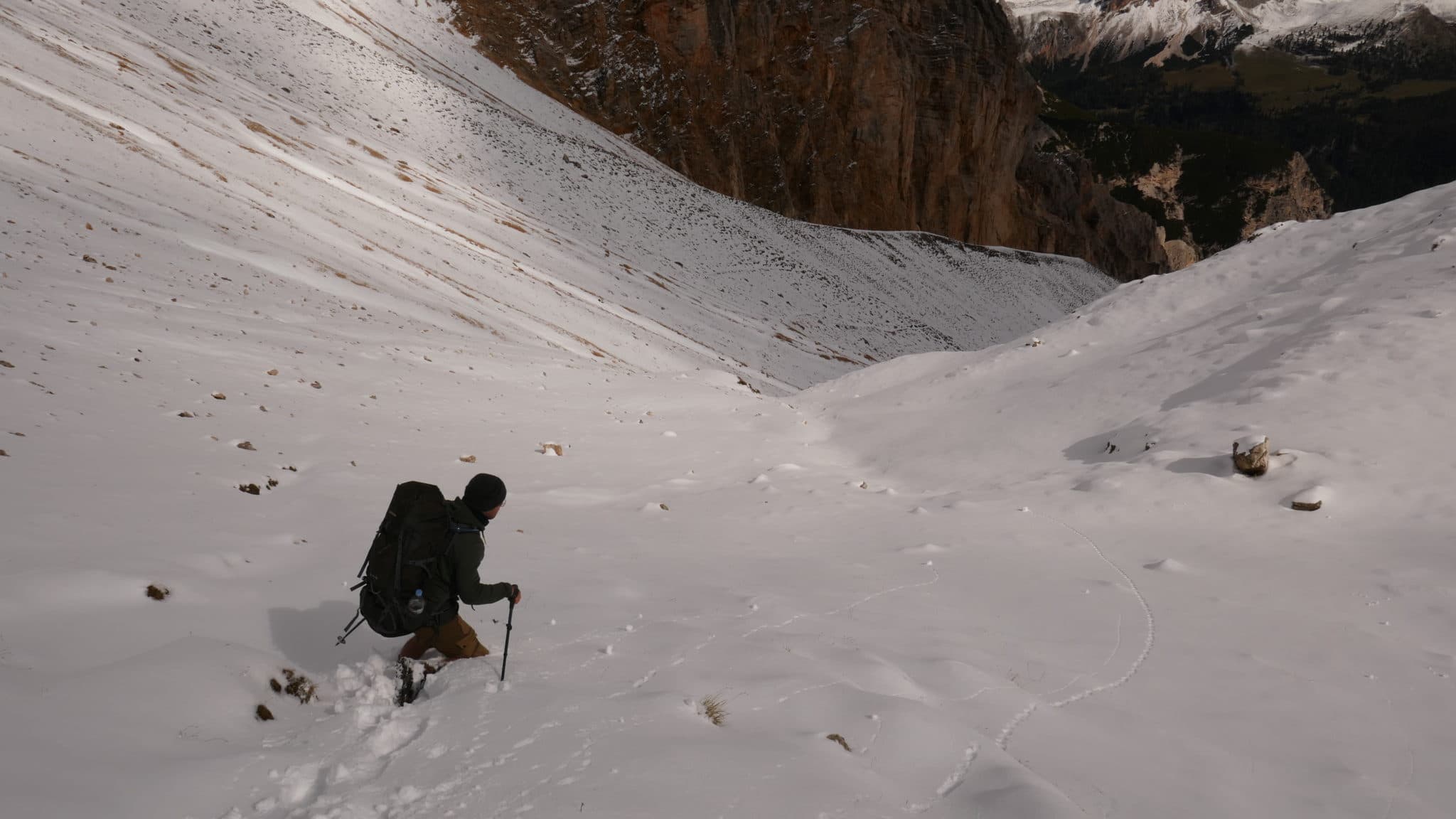
Wet, cold legs ruin hikes faster than almost any other discomfort. Your upper body has layers sorted: base layer, fleece, waterproof shell. Your legs often get an afterthought. The result is cold, clammy legs that make the final descent miserable and extend the recovery time after a winter day out.
The best winter hiking pants get the lower body right by sorting two decisions: the right pant for active hiking versus cold stops, and how to layer for the specific conditions you're facing.
The Three Approaches to Winter Leg Layering
Single Layer: Softshell Pants
A good softshell pant is the most versatile winter hiking option. Softshell fabrics combine a degree of wind and water resistance with stretch and breathability that rigid shell fabrics lack. They handle mixed conditions (some snow, some wind, active movement) better than either a pure base layer or a hard shell alone.
For temperatures between -5°C and +5°C on active terrain, a softshell pant is often enough as a single layer. Below -5°C or in sustained precipitation, you need more.
Two Layers: Base Layer + Shell
A thermal base layer under waterproof shell trousers is the classic cold and wet approach. The base layer provides insulation; the shell provides wind and water protection. This combination is more waterproof than softshell pants but less breathable during sustained uphill effort.
Works well for: sustained cold rain, spring snow conditions, temperatures below -5°C on moderate terrain.
Three Layers: Base + Mid + Shell
For serious winter conditions (prolonged sub-zero temperatures, alpine environments, overnight camping in snow), all three layers make sense: thermal leggings as the base, one of the best insulated hiking pants as the mid layer, and a waterproof shell over the top.
This is overkill for most day hiking below 1,500m in standard winter conditions. It's appropriate for high-altitude winter routes and multi-day winter camping.
What to Look for in Winter Hiking Pants
Stretch
Winter hiking involves high knee lifts on steps, scrambles over snow-covered rock, and wide strides on steep terrain. A pant that doesn't stretch at the knee or thigh restricts movement and becomes tiring over hours. Look for 2-way or 4-way mechanical stretch.
Articulated Knees
Articulated knees (a shaped, forward-angled seam at the knee) reduce tension on the fabric during flexion. This makes the difference between a comfortable fit at 500m and an irritating tightness by the end of a long day. Check for this in any pant over $80.
Water Resistance
Even softshell pants without a full membrane should have DWR (Durable Water Repellent) coating at minimum. This handles light snow and brief rain without soaking the fabric. For sustained precipitation, a waterproof membrane is required.
Boot Compatibility
Look for lower leg zip vents or ankle snaps that can seal around boot collars. This keeps snow out during post-holing and stops the hem dragging in slush. Some winter pants include an internal gaiter stirrup that goes under the boot.
Pockets
Two zippered hand pockets are the minimum for winter use. Hip pockets are accessible with a hip belt pack; thigh pockets are accessible under a backpack. Avoid non-zip pockets that let items fall out on scrambles.
Best Winter Hiking Pants
Top Winter Hiking Pants
Arc'teryx Gamma LT Pant
$200
?Estimated price — check latest price on Amazon
Best softshell for active winter hiking
Pros
- ✓Softshell with Fortius DW 1.0 fabric: wind and light moisture resistant
- ✓Gusseted crotch and articulated knees for full movement
- ✓Low-profile pockets accessible under hip belt
- ✓Trim but not restrictive fit
Cons
- ✕Expensive at $200
- ✕Not waterproof in sustained heavy rain
Outdoor Research Ferrosi Pant
$85
?Estimated price — check latest price on Amazon
Best value softshell for cold-weather hiking
Pros
- ✓Lightweight softshell at 290g
- ✓4-way stretch for unrestricted movement
- ✓DWR-coated face fabric resists light precipitation
- ✓Excellent value at $85
Cons
- ✕Lower wind resistance than heavier softshells
- ✕No waterproofing for heavy rain
Marmot Scree Pant
$130
?Estimated price — check latest price on Amazon
Cold, dry, windy conditions where insulation matters
Pros
- ✓Polartec Power Shield main fabric with windblock fleece
- ✓Articulated knees and gusseted crotch
- ✓Ankle zips with boot hook
- ✓Excellent in cold and windy conditions
Cons
- ✕Heavy at 560g
- ✕Not designed for wet rain conditions
Arc'teryx Gamma LT: Best Softshell for Active Hiking
The Gamma LT is Arc'teryx's benchmark softshell trouser and one of the most consistently recommended winter hiking pants among experienced alpine hikers. The Fortius DW fabric blocks wind effectively and sheds light moisture without the crinkle and stiffness of a hard shell.
The movement pattern is exceptional. Gusseted crotch, articulated knees, and a cut that doesn't tighten on high steps mean you forget you're wearing them. This matters after 6 hours on a technical winter route.
At $200 they're expensive. They last 5+ years of regular hard use with reasonable care, which makes the per-use cost more reasonable than it appears.
Outdoor Research Ferrosi: Best Value Softshell
The Ferrosi Pant is the most commonly recommended budget softshell for winter hiking, and for good reason. The 4-way stretch fabric handles movement well, the 290g weight is competitive, and the DWR coating manages the drizzle and light snow that makes up most UK and northern European winter hiking conditions.
It falls short of the Gamma LT in wind resistance (thinner face fabric) and durability (lighter denier). For most day hikers in moderate winter conditions, the gap doesn't matter. For multi-day routes or consistently harsh conditions, the Gamma LT's heavier construction shows its value.
At $85, the Ferrosi is one of the best value hiking trouser purchases in the category.
Marmot Scree Pant: Best for Windy Conditions
The Scree Pant uses Polartec Power Shield, a wind-blocking fleece construction rather than a traditional softshell. The result is a warmer, heavier pant that excels in cold and windy conditions at the expense of versatility in rain.
The ankle zips with integrated boot hook are a practical detail: they create a seal around your boot collar to keep snow out, and the hook prevents the hem from riding up over your boot gaiters. For genuinely cold, dry, windy winter days, the Scree Pant's warmth advantage over lighter softshells is significant.
How to Layer with Waterproof Shell Pants
For sustained rain or wet snow, add waterproof shell trousers over whichever mid-layer you're wearing. The key is choosing shell trousers you can put on without removing your boots. Look for full-length leg zips or at minimum half-length ankle zips.
Our best cheap rain pants guide covers the affordable shell options that work well over base layers and softshell pants.
For the base layer, a mid-weight merino wool or synthetic thermal legging (150-200g fabric weight) provides enough insulation for most winter day hiking in the 0°C to -10°C range. Go heavier (200-250g) for prolonged static time or colder temperatures.
Avoiding Common Mistakes
Wearing jeans. Cotton denim provides almost no warmth when wet, dries extremely slowly, and becomes heavy with moisture. Even cheap synthetic hiking trousers outperform jeans in every measurable way for winter hiking.
Oversizing for warmth. A baggy pant doesn't keep you warmer; it snags on vegetation, flaps in wind, and restricts movement on scrambles. The insulation should come from your base layer and mid layers, not an oversized fit.
Forgetting the ankle seal. Snow entering through your boot/trouser gap rapidly chills your lower leg. Even a basic gaiter solves this.
Skipping the wind layer. In windy conditions, even lightweight softshell pants reduce wind chill significantly compared to regular hiking trousers. Wind is often the most uncomfortable element in winter hiking, and it's the cheapest to address.
Winter hiking trousers don't need to be complicated. A good quality softshell handles most conditions; shell pants over a base layer covers the rest. Invest in stretch, articulation, and proper ankle sealing, and your legs will be comfortable on the coldest winter day.
Last updated on June 21, 2026.

Jasper Baetens
Hiking enthusiast from Belgium, mainly active in Europe. Created HikeHeaven to share experiences, research, tips, tricks and recommend products — or simply to help other hikers.